
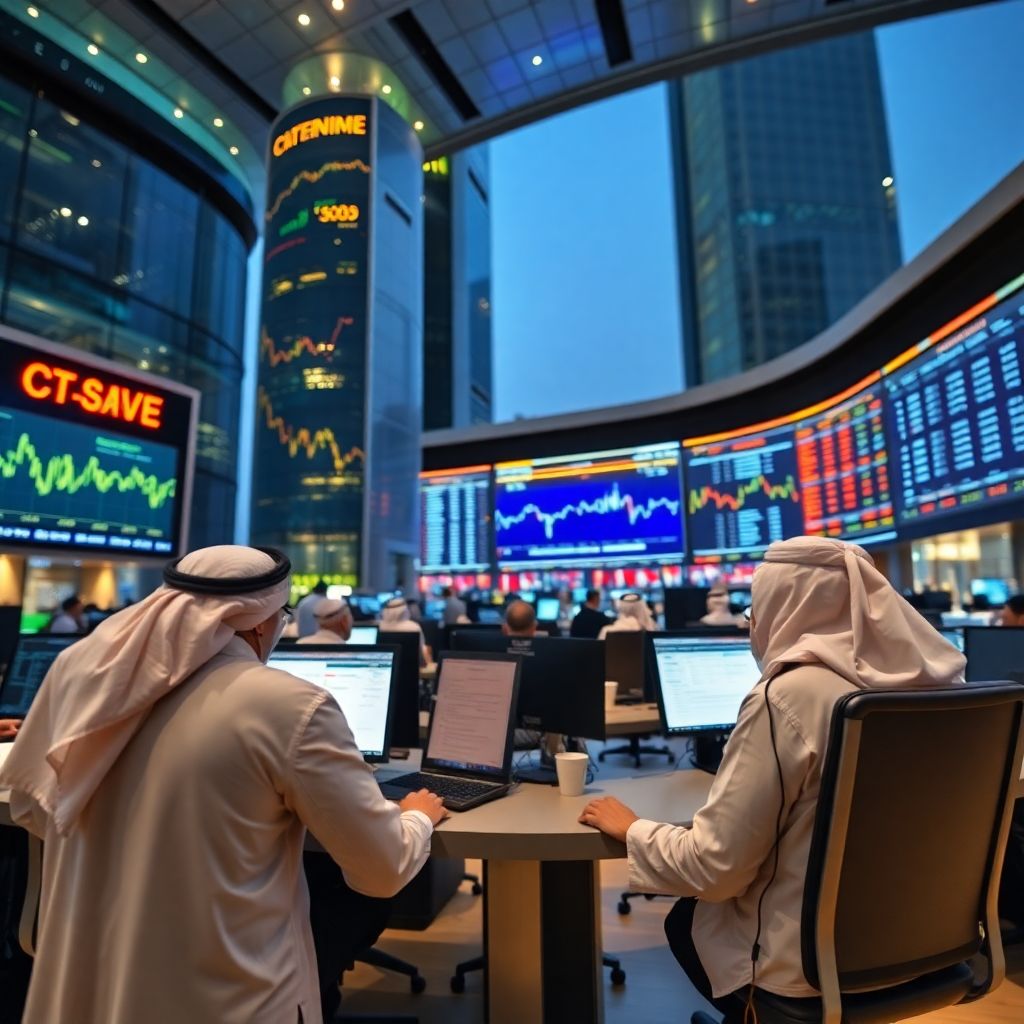
Gulf Bonds’ Safe‑Haven Reputation: Under Pressure in Headlines, Resilient in Credit Markets
For years, sovereign and quasi-sovereign bonds from the Gulf Cooperation Council (GCC) – particularly those issued by Saudi Arabia, the United Arab Emirates, Qatar, Kuwait, Oman, and Bahrain – have been treated as a de facto safe haven within emerging markets. Strong fiscal buffers, vast hydrocarbon reserves, and, in several cases, sizable sovereign wealth funds gave investors confidence that governments in the region could weather oil shocks, currency volatility, and regional tensions.
Recently, however, that safe‑haven label has been tested in the court of public opinion. Headlines focus on geopolitical risks, energy transition pressures, and questions about the long‑term viability of oil‑dependent economies. Yet, credit markets themselves have been far less dramatic. Bond spreads, ratings actions, and default expectations tell a more nuanced story: while the narrative around Gulf bonds looks fragile, the underlying credit performance remains notably robust.
Why Gulf Bonds Were Seen as Safe in the First Place
Several structural features underpin the region’s bond appeal:
1. Oil-backed fiscal strength
High hydrocarbon revenues have historically generated budget surpluses and large foreign-exchange reserves. This allowed Gulf governments to accumulate financial assets and keep public debt at relatively moderate levels compared with many emerging peers.
2. Supportive sovereign wealth funds
Countries like the UAE, Qatar, and Saudi Arabia maintain some of the world’s largest sovereign wealth funds. These pools of capital act as an additional buffer in times of stress, reinforcing the perception that governments have both the willingness and capacity to support their obligations.
3. Stable exchange rate regimes
Most Gulf currencies are pegged to the US dollar. This arrangement reduces FX risk for global investors buying dollar-denominated bonds and aligns local monetary policy closely with the US Federal Reserve.
4. Improving institutional frameworks
Over the past decade, many GCC states have strengthened fiscal rules, debt management strategies, and regulatory frameworks. Credit rating agencies have rewarded these steps with stable or improving outlooks for several issuers.
What Is Putting the Safe‑Haven Status “Under Fire”?
Despite these positives, several forces have challenged the easy narrative of Gulf bonds as unquestioned safe assets:
1. Geopolitical tensions
Periodic flare-ups in regional conflicts, security incidents around key shipping routes, and shifting alliances all raise questions about tail risks. Even if such events rarely result in actual payment distress, they can undermine investor comfort.
2. Oil price volatility and energy transition
The global push toward decarbonization, together with cyclical swings in oil prices, fuels concerns about long-term fiscal sustainability. If demand for hydrocarbons declines faster than expected, budget balances, current accounts, and growth prospects could come under pressure.
3. Rising issuance and growing debt loads
Ambitious development plans, large infrastructure projects, and diversification initiatives have led to increased borrowing. While debt levels are still manageable for most GCC states, the upward trajectory attracts scrutiny.
4. Higher global interest rates
As global yields rose, investors began to reassess risk premiums across all emerging markets. Gulf issuers were not immune to this repricing, especially at the longer end of the curve.
Credit Markets: Calm Beneath the Noise
Despite these concerns, the behavior of Gulf bonds in secondary markets has been relatively resilient compared with many other emerging issuers:
– Tight spreads vs EM peers
Sovereign Gulf dollar bonds often trade at narrower spreads over US Treasuries than comparable emerging market credits. This suggests that investors still price them closer to semi-core rather than high-beta EM risk.
– Limited rating deterioration
Rating agencies have generally maintained stable outlooks for major GCC sovereigns. Where downgrades have occurred in the past, they were often modest and linked to specific fiscal or structural challenges, not imminent default risk.
– Strong primary market demand
New issues from top-tier Gulf borrowers typically attract solid oversubscription, indicating sustained investor appetite. Order books often include a broad mix of global asset managers, regional banks, and long-only institutions.
– Low default expectations
Credit default swap (CDS) spreads on key GCC names, while occasionally volatile during global risk-off episodes, have remained far below levels associated with genuine distress.
In other words, while commentary outside the bond market might imply a fragile outlook, the actual pricing and positioning of professional credit investors still signal confidence.
Differentiation Within the Region
It is important, however, not to treat “Gulf bonds” as a monolith. Risk profiles vary:
– Core vs peripheral issuers
The UAE, Qatar, Saudi Arabia, and Kuwait are generally viewed as core credits with stronger balance sheets and deeper financial buffers. Oman and Bahrain, while improving in recent years, carry comparatively higher risk premiums and more sensitivity to oil prices.
– Sovereign vs quasi-sovereign
Bonds from state-owned enterprises, especially in sectors like energy, utilities, and infrastructure, often benefit from implicit or explicit government support. Still, the strength of that backing can differ from one issuer to another, requiring careful credit analysis.
– Maturity and structure
Long-dated bonds react more sharply to changes in global rates and risk sentiment, while shorter tenors can behave more defensively. Structural features such as covenants, governing law, and documentation quality also influence investor perceptions.
How Gulf Bonds Behave in Risk-Off Episodes
Historical episodes of global stress provide insight into their safe‑haven credentials:
– During broad emerging market sell-offs, Gulf bonds typically widen in spread, but often less dramatically than lower-rated peers in other regions.
– In oil price collapses, initial market reactions can be severe, yet support from fiscal reserves and policy responses usually stabilizes credit metrics faster than feared.
– When geopolitical headlines intensify, price moves are frequently sharp but short-lived, especially for top-quality sovereigns, as investors reassess whether the events truly alter default risk.
These patterns point to a hybrid role: Gulf bonds are not “risk-free” in the way developed-market government bonds are perceived, but within the emerging universe they often function as a relatively defensive, higher-quality segment.
Key Risks Investors Still Need to Monitor
For all their resilience, Gulf bonds carry real risks that cannot be ignored:
1. Pace of economic diversification
The success of large-scale reforms aimed at reducing dependence on oil revenues will be critical over the next decade. Delays or policy reversals could undermine medium- to long-term debt sustainability.
2. Fiscal discipline in an era of high spending
Ambitious national visions, megaprojects, and social spending commitments must be balanced against the need to preserve buffers. Failure to adjust in low oil price environments would be a warning sign.
3. Global climate and regulatory pressures
Increasing climate-related regulation, potential carbon border adjustments, and shifts in energy investment patterns may gradually alter the economics of oil exports, with implications for rating agencies’ views.
4. Regional political shocks
While markets have become somewhat accustomed to periodic flare-ups, a truly systemic geopolitical shock could recalibrate the region’s risk premium.
Why the Market Still Grants a Safe‑Haven Premium
Despite these risks, several elements explain why credit markets continue to assign a relative safe‑haven premium to many Gulf issuers:
– Demonstrated willingness to honor obligations
Even during sharp oil downturns, GCC governments have generally prioritized maintaining market access and protecting their credit reputation.
– Deepening local and regional investor base
Increasing participation from domestic institutions provides a stable demand anchor for Gulf debt, reducing dependence on hot money flows.
– Integration with global benchmarks
Inclusion of Gulf sovereigns and corporates in major bond indices has institutionalized their role in global portfolios, creating structural demand.
– Policy adaptability
Steps such as the introduction of VAT in several countries, subsidy reform, and gradual fiscal consolidation demonstrate some capacity to adjust to changing conditions.
What This Means for Different Types of Investors
– Institutional investors may continue to view high-quality Gulf bonds as a defensive component within an emerging market allocation, accepting episodic volatility in exchange for relatively strong credit fundamentals.
– Total-return focused managers will likely differentiate more aggressively between issuers, favoring those with credible reform agendas and stronger balance sheets.
– Risk-averse investors should recognize that “safe haven” here is a relative, not absolute, concept: Gulf bonds can perform defensively versus EM peers but will still fluctuate with global risk sentiment and energy cycles.
The Bottom Line
Gulf bonds’ safe‑haven status is under constant scrutiny in commentary focused on geopolitics, oil dependency, and long-term climate risk. Yet, when one looks at where money actually moves – in spreads, yields, ratings, and default protection – the picture is far less alarming. Credit markets, while not blind to the challenges, continue to assign many Gulf issuers a place near the top of the emerging market quality spectrum.
The contrast between anxious narratives and comparatively calm credit metrics highlights a key point: Gulf bonds are neither risk-free nor on the brink of systemic trouble. They occupy a middle ground – safer than much of the emerging universe, but still firmly part of it. For investors willing to navigate the region’s complexities, they remain a core, albeit specialized, building block in global fixed-income portfolios.