
Historical Background: Why Credit Protection Became a Survival Skill
From simple ledgers to algorithmic risk scores
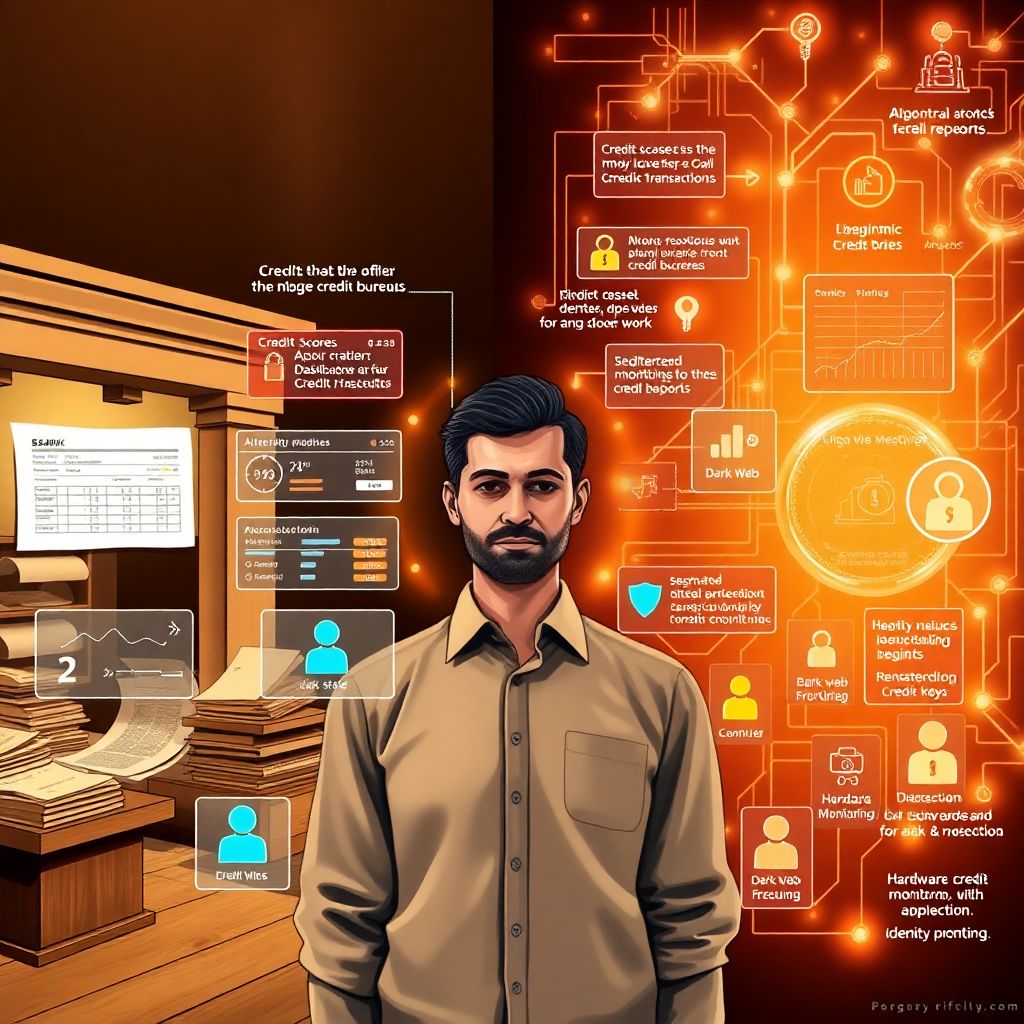
In the early days of consumer lending, “credit files” were literally paper folders in local banks, and protecting your credit meant maintaining a personal relationship with a single loan officer. After the 1970s, centralized credit bureaus, automated scoring models and mass‑market credit cards transformed credit from a local judgment into a data‑driven ecosystem. Each major crisis — the savings and loan collapse, the dot‑com bust, the 2008 mortgage meltdown, the COVID‑19 shock — added new regulatory layers like the FCRA and FACTA, but also increased digital attack surfaces. Today, a crisis no longer just threatens your cash flow; it can cascade across data brokers, lenders and collections systems within days if your credit profile is not actively defended and continuously monitored.
Short version: credit is now a real‑time data infrastructure, not just a loan record. That’s why any plan for how to protect your credit during a financial crisis has to address both the financial side (cash‑flow shocks, delinquencies, utilization spikes) and the data‑security side (breaches, synthetic identities, phishing). Understanding that dual nature is step one; otherwise you’ll try to fix a network problem with purely household‑budget tools and get blindsided by issues you never see coming.
Crises rewired the rules of the game
Repeated downturns also changed how lenders react under stress. In the 1990s a late payment might stay a local issue; by 2008, risk algorithms began auto‑lowering credit limits or repricing interest rates after just a few utilization or delinquency triggers. During the pandemic, ad‑hoc forbearance programs, mass unemployment and stimulus checks proved that system‑wide “pauses” are possible — but highly inconsistent across creditors. At the same time, large‑scale data breaches normalized credential theft as a background risk. That mix of automated risk scoring and industrial‑scale identity theft means credit protection is no longer a passive activity; it’s an ongoing operational discipline closer to cybersecurity than to traditional “personal finance.”
Put differently, your grandparent’s playbook — “pay on time, avoid too much debt, you’ll be fine” — is necessary but not sufficient anymore. Today you also need contingency protocols: how to freeze your credit report with all three bureaus in under an hour, how to segment digital identities across accounts, and how to invoke consumer‑protection rights fast when a crisis hits. The historical trend is clear: more data, more automation, more interconnected risk. Your response has to be equally systematic, or the system will make decisions about you before you even notice something is wrong.
Basic Principles of Credit Protection in a Crisis
Think like a risk manager, not just a borrower
Start by reframing your role: you are effectively the chief risk officer of a small personal balance sheet. That means mapping exposures (which creditors can raise rates, close limits, or accelerate balances), understanding critical metrics (credit utilization ratio, payment history, age of accounts, inquiry velocity) and defining your “must‑protect” assets, such as mortgage terms or a key business line of credit. In a crisis — job loss, medical emergency, market crash — your objective is not perfection; it’s damage control: preserving score bands, preventing derogatory marks, and blocking identity‑based fraud while your income and expenses rebalance. This risk‑management mindset makes it far easier to prioritize actions under stress instead of reacting randomly.
On a practical level, that mindset translates into a short list of control levers: cash‑flow triage (who gets paid first, who gets negotiated with), data‑access controls (freezes, fraud alerts, account segmentation), and communication protocols (how and when you talk to lenders). A surprising amount of credit damage happens not because people can’t pay at all, but because they don’t communicate early, don’t exploit available hardship programs, and don’t restrict data access when warning signs appear. When you treat every crisis as an incident response scenario, you start building checklists, templates and default decisions in advance, which sharply reduces panic‑driven mistakes.
Separate “credit health” from “emotional fairness”
Crises create moral friction: you may feel obligated to pay certain creditors first because they “feel” more legitimate, even if doing so wrecks your overall profile. Credit scoring models do not care about narrative; they care about patterns of reported behavior. Protecting your credit often means prioritizing accounts that report to major bureaus and have high algorithmic weight, even if that feels unfair compared with, say, a personal loan from a friend. This is not about ethics — you should still honor personal obligations — but about recognizing that score mechanics and emotional logic diverge under stress.
That’s why one underrated step is to maintain a simple ranking of accounts by “system impact” before anything goes wrong. Revolving lines with large limits, long‑standing installment loans and your primary mortgage or auto loan almost always outrank store cards or niche lines. When trouble hits, you already know where a 30‑day late would be catastrophic versus mostly noise. By decoupling emotional weight from scoring impact in advance, you’ll find it easier to make disciplined, technically sound decisions when you’re under pressure.
Credit protection is also cybersecurity
Most people treat fraud as an unlucky event, not as a manageable class of risk. But the same way organizations deploy layered security, individuals should combine monitoring, segmentation and throttling. Monitoring means you — or a service — continuously scan for abnormal activity in your credit files and financial accounts. Segmentation means you don’t reuse credentials or blend work, shopping and banking identities. Throttling means you deliberately slow down or block new‑account creation via freezes or locks unless you explicitly authorize them.
In that sense, the best identity theft protection plans for families aren’t just about insurance payouts if something goes wrong; they’re about proactive hygiene: dark‑web monitoring for reused credentials, child credit file locking, alerts on new tradelines, and guided remediation flows when an incident is detected. During a broader financial downturn, fraud attempts usually rise. Having pre‑configured layers in place is far more effective than trying to bolt them on while you’re also dealing with income loss, medical issues or other stressors.
Examples of Practical — and Nonstandard — Implementation
Scenario 1: Job loss with high available credit
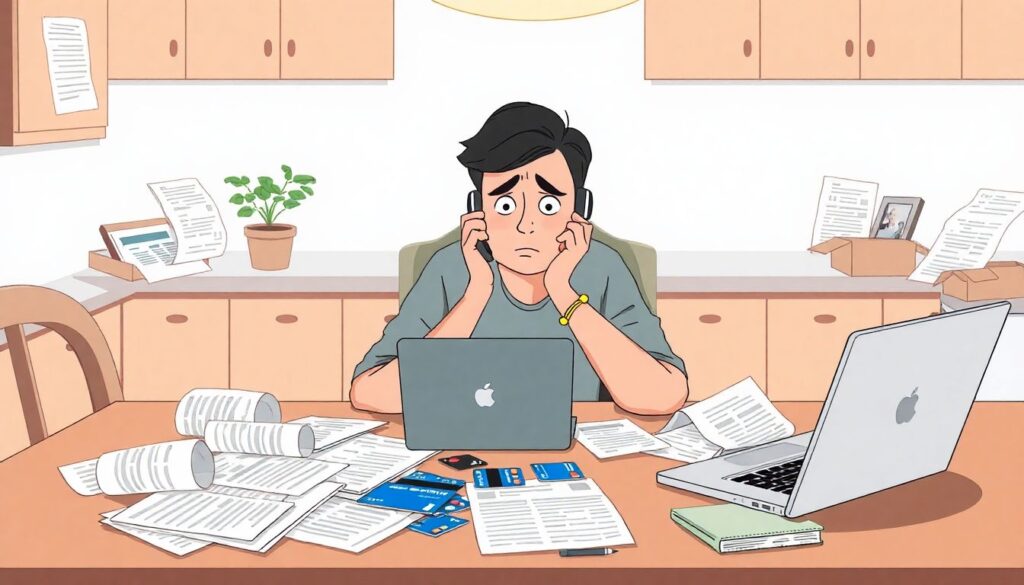
Imagine you lose your job but still have multiple open lines with decent limits. The standard advice is to “cut up your cards and stop using credit.” That can backfire. A more nuanced protocol would be: step one, lock in flexible arrangements with key creditors before you miss any payments — hardship programs, temporary interest reductions, or modified payment plans. Step two, strategically consolidate volatile balances into less volatile structures (for example, a low‑rate personal loan) while your score is still strong. Step three, reduce utilization on a small number of high‑impact cards, even if that means letting less important accounts close or go dormant. Throughout, enable real‑time alerts and lock features on every card to reduce fraud risk while you’re distracted updating résumés and negotiating severance.
A nonstandard twist: treat one major general‑purpose card as your “sacrificial” account if the crisis deepens more than expected. You intentionally minimize dependence on that card, keep its utilization relatively low, but accept that if things become unmanageable, that’s the account likeliest to take a hit first. This sounds odd, but by pre‑selecting a lowest‑impact trade line as the potential damage sink, you avoid spreading small delinquencies across many accounts, which often hurts scores more severely than localized damage on a single, strategically chosen line.
Scenario 2: Health crisis and data‑exhaust overload
Medical shocks don’t just create large bills; they generate massive data exhaust across hospitals, insurers and billing contractors. A classic failure mode is “bill ping‑pong,” where misrouted invoices quietly age into collections while you’re still undergoing treatment. Here, your playbook should include a dedicated “billing inbox” — a separate email and virtual phone number used exclusively for medical and financial communications — plus a weekly sweep routine. This functional isolation makes it easier to track every statement, dispute coding errors quickly, and document agreements with providers, which is crucial if you need to prove that a “collection” is actually a billing error.
On the credit‑file side, this is where knowing how to freeze your credit report with all three bureaus becomes a practical skill, not trivia. A temporary but comprehensive freeze during extended treatment windows limits opportunistic fraud if your physical mail, phone or primary inbox is intermittently unattended. For nonstandard protection, consider granting a trusted third party — a financially literate relative or advisor — read‑only access (view‑only banking credentials or shared monitoring dashboards) plus explicit instructions for what to do if they see anomalies while you’re incapacitated. Think of it as a human failover system for your credit defense.
Scenario 3: Data breach plus economic downturn
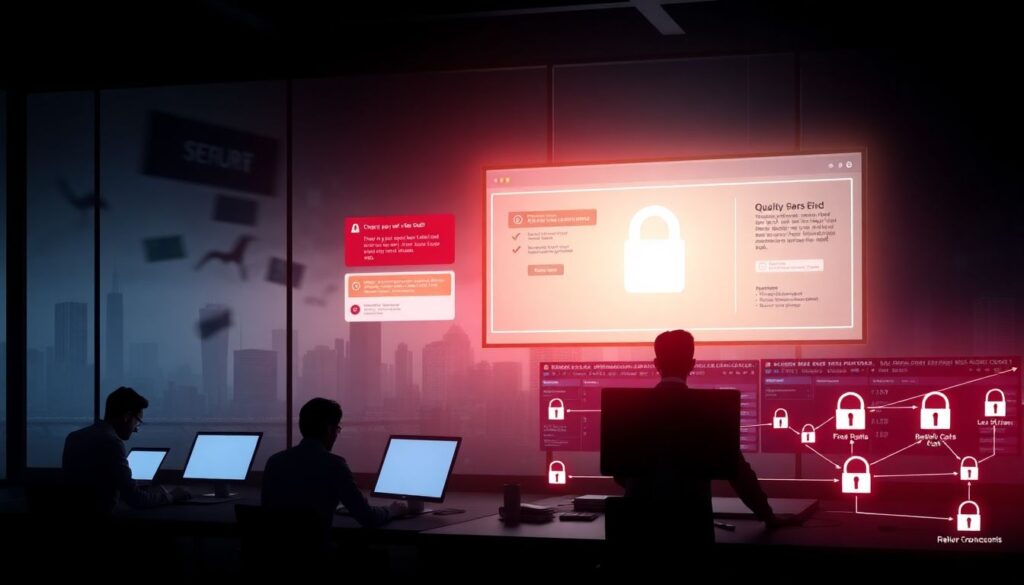
Suppose a major platform you use suffers a breach at the same time macro conditions are deteriorating. Many people respond by changing a few passwords and hoping for the best. A more operational response would be: first, rotate credentials, but also re‑map which financial institutions are linked to which email addresses and phone numbers. Deliberately create “hardened” identities for banking and brokerage accounts — unique email, restricted device list, hardware‑based multi‑factor authentication — and unlink them from high‑exposure logins used for shopping or social media. Second, downgrade transaction limits and daily transfer caps across critical accounts while volatility is high, then gradually raise them later as conditions stabilize.
Complement this with targeted monitoring. During periods like this, the best credit monitoring services for identity theft protection are the ones that can consolidate alerts from all major bureaus, flag both hard and soft inquiries, and provide fast, guided workflows to dispute fraudulent tradelines. An unconventional layer is to use burner virtual cards for all new online merchants during the crisis window; you’re not just protecting cash — you’re also minimizing the number of places where your primary card numbers can be compromised at the worst possible time.
Scenario 4: Recovery and structured repair
Assume the crisis has already inflicted some damage: late payments, elevated utilization, maybe a collection. Many people rush into generic credit repair products, expecting miracles. Realistically, credit repair is a combination of compliance enforcement (forcing furnishers to accurately report) and structural reshaping of your profile (mix, age, utilization). If you consider any credit repair services after financial hardship, treat them like specialized vendors: review their legal basis, contract terms, data‑handling practices, and exit options, and insist on transparency about what they can and cannot legitimately dispute.
Nonstandard recovery tactics include time‑boxing your repair effort into sprints. For 90 days, you aggressively tackle documentation, disputes, goodwill letters and negotiated pay‑for‑delete where ethically and legally appropriate; then you shift focus to building positive data: small, automated payments on low‑limit cards, installment loans with predictable amortization, and periodic limit‑increase requests to compress utilization. By separating “cleanup” from “growth,” you create clean feedback loops and maintain motivation, which is crucial for a process that can otherwise feel endless.
Common Misconceptions That Quietly Wreck Credit During Crises
“Freezing credit is only for victims of fraud”
A widespread misconception is that freezes are extreme tools reserved for confirmed identity theft. In reality, a freeze is simply a throttle on new‑account creation based on your credit files. During high‑risk periods — mass layoffs in your industry, regional disasters, major breaches — proactively freezing is akin to locking your front door in a sketchy neighborhood. You can temporarily lift the freeze for specific creditors when needed. This is especially relevant for households; combining freezes with strong monitoring and hardened logins often surpasses the protection level of many default bank settings without reducing your ability to function day to day.
What confuses people is the difference between freezes, locks, and fraud alerts. A fraud alert asks lenders to perform extra verification but doesn’t block access. A lock is typically a bureau‑specific, app‑based version of a freeze, sometimes bundled with subscription services. Understanding these distinctions in advance prevents panic and lets you assemble a coherent defensive stack tailored to how actively you expect to seek new credit in the near term.
“Monitoring and protection plans are all the same”
Another myth is that all credit or identity monitoring tools are interchangeable. In practice, capabilities vary widely: some focus on credit‑file events only; others integrate bank‑account alerts, dark‑web scans, public‑records checks and guided recovery. When budgets are tight — as they usually are in a crisis — you want maximum functional density: alerts that matter, low false positives, and actual help if something goes wrong. Evaluating the best credit monitoring services for identity theft protection is less about their marketing checklists and more about operational questions: Can you actually reach a human? How fast are disputes initiated? Do they provide detailed timelines and documentation you can reuse with creditors and regulators?
A subtle but important point: no monitoring service prevents fraud by itself. It shrinks the detection window. The real prevention comes from your configuration of freezes, locks, segmented identities and constrained transaction limits. Seeing monitoring as an early‑warning sensor — not a force field — aligns expectations and encourages you to pair it with the structural controls described earlier.
“Using credit during a crisis is always bad”
People often swing between two extremes: reckless swiping or total avoidance. Both can be harmful. Scoring models like to see responsible activity; a complete shutdown of usage for long periods can lead to limit decreases or dormant‑account closures, which in turn raise your utilization ratio and compress your credit history. On the flip side, maxing out every card signals acute distress and can trigger adverse‑action algorithms even before you miss payments. The optimal path is controlled utilization: small, predictable charges on a few key lines, backed by automated minimum payments and, when possible, partial prepayments to keep ratios in check.
An unconventional but effective tactic is to run “micro‑transactions” during crises: tiny recurring subscriptions or monthly essentials assigned to specific cards, with calendar reminders to verify posting and payments. This produces a clean stream of positive data at minimal risk and gives you tight observational control: any unexplained extra charge stands out immediately against the predictable baseline, making fraud detection faster without overwhelming you with noise.
“Identity theft protection is a luxury, not a necessity”
Finally, many households treat protection plans as optional add‑ons to be cut first when trimming expenses. That reasoning ignores asymmetric downside: one undetected fraudulent loan or tax return can consume dozens of hours and thousands of dollars to fix, right when you can least afford it. The best identity theft protection plans for families act less like insurance brochures and more like incident‑response partners: they provide standardized playbooks, pre‑negotiated support channels with bureaus and creditors, and, crucially, education on day‑to‑day hygiene so incidents are less likely in the first place.
The nonstandard angle is to view these plans as temporary scaffolding. During or immediately after a severe crisis, your cognitive bandwidth is low and your vulnerability high; paying for an elevated level of monitoring and response for 12–24 months can be rational, then you can downgrade once your systems and habits are stronger. This dynamic approach — scaling protection intensity with your risk profile instead of treating it as a binary choice — aligns costs with actual exposure and makes sustained credit resilience far more achievable.