
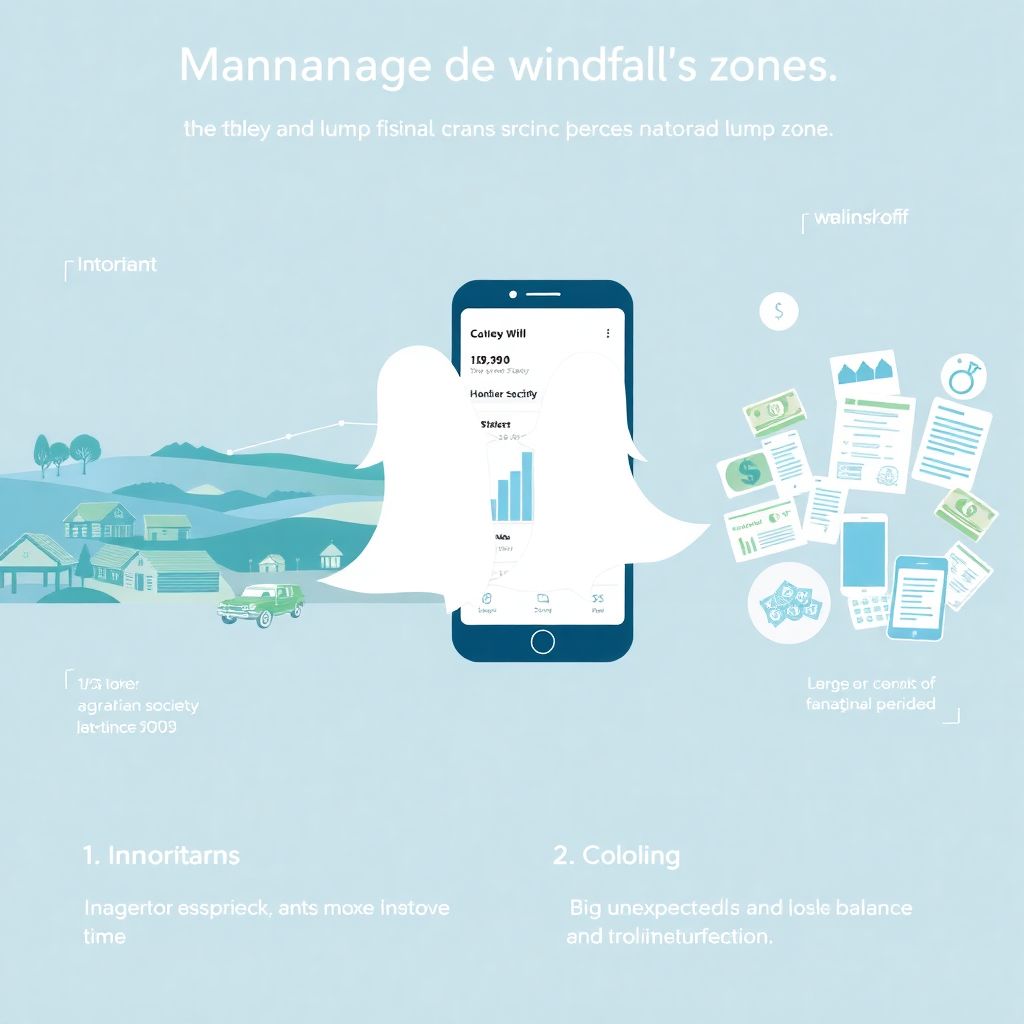
Historical backdrop: from sudden riches to structured decisions
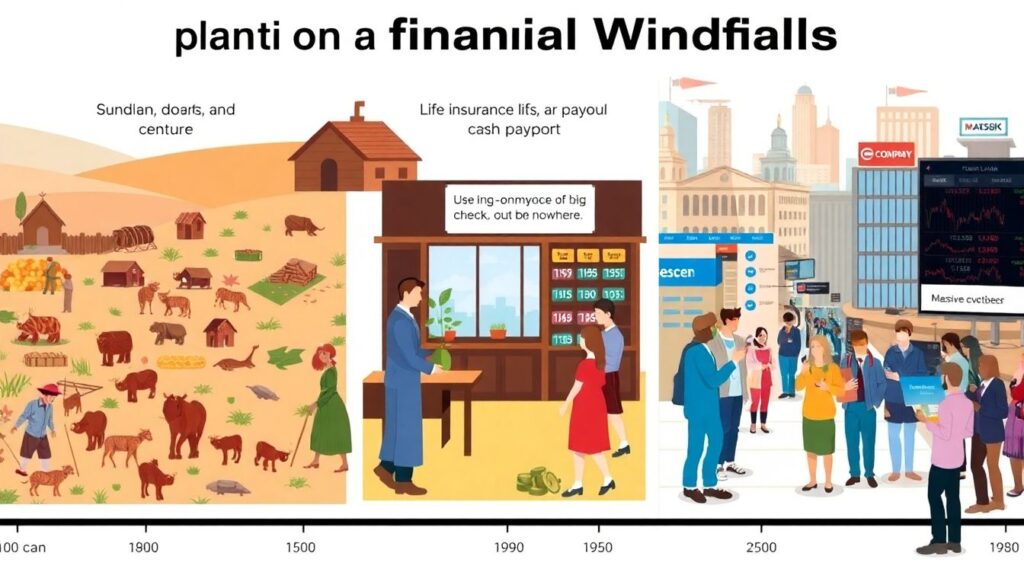
If you look back a few centuries, windfalls were mostly tied to land, dowries, and inheritances in agrarian societies. A “big check out of nowhere” simply didn’t exist for the average person. That changed with the spread of life insurance in the late XIX–XX centuries and, later, with mass stock ownership, lotteries and modern compensation systems. In the US, data from the Federal Reserve’s Survey of Consumer Finances shows that between 2022 and 2024, about 20–25% of households reported receiving some form of inheritance or large transfer over their lifetimes, and that share is rising as baby boomers pass on assets. At the same time, the Multi-State Lottery Association reports that jackpots over $100 million have become almost routine, occurring multiple times a year. Despite this, behavioral research from places like the University of Kentucky and RAND over the last three years keeps finding the same pattern: roughly a third to a half of people who suddenly receive large sums see little or no long‑term improvement in their net worth because the money gets absorbed into day‑to‑day consumption or speculative bets. This history explains why modern guides focus less on the thrill of a windfall and more on how to invest a lump sum of money in a deliberate, evidence‑based way that avoids repeating the same wasteful patterns.
Basic principles: what to do with a financial windfall to build wealth
When money lands in your account unexpectedly, the hardest part is usually not the math but the emotions. Over the last three years, surveys by Vanguard and Fidelity have repeatedly shown that investors who receive a big payout tend to either freeze (do nothing for a long time) or sprint (spend or invest impulsively within weeks). Both extremes can be dangerous. A practical first step, backed by both academic research and financial‑planning practice, is a “cooling‑off period” of 30–90 days where the only action you take is to park the funds in a high‑yield savings or treasury money market account. This small pause reduces the risk of regret and gives you space to decide what to do with a financial windfall to build wealth in a way that actually matches your goals instead of your mood that week. From there, the core principles are surprisingly simple: secure your short‑term resilience (emergency fund, high‑interest debt), automate long‑term investing into diversified, low‑cost portfolios, and ring‑fence a modest fun portion so you don’t feel deprived. Numerous studies between 2022 and 2024, including work published in the Journal of Financial Planning, show that households who follow a simple rules‑based approach like this tend to retain a far larger share of their windfall after 5–10 years than those who chase “hot tips” or try to time the market.
How to use bonus or tax refund to build wealth (and why small windfalls matter)
Big inheritances get all the headlines, but for most people the “windfalls” that truly move the needle are regular year‑end bonuses, occasional stock‑option vesting, and annual refunds from the tax authority. In the US, IRS data from 2022–2024 shows that the average federal tax refund has hovered around $2,700–$3,100, and more than 70% of filers receive some refund at all. At the same time, payroll reports indicate that a growing slice of total compensation is coming in the form of variable pay like bonuses and RSUs, especially in tech and finance. The upside: you get recurring opportunities to make smart choices. The downside: because each individual amount feels “small compared to my salary,” it’s tempting to just upgrade lifestyle. A more intentional approach is to decide in advance how to use bonus or tax refund to build wealth. For example, you might choose a simple 50/30/20 rule: 50% to long‑term investing, 30% to short‑term priorities like paying down debt or topping up cash reserves, and 20% guilt‑free spending. Even with modest sums, the math compounds: if you invested a $3,000 refund annually from 2022 through 2052 at a 7% real return, you would end up with roughly $304,000 in today’s dollars. That’s just one person’s consistent decision about an event that many people still treat as “free money” for impulse shopping.
– Practical ways to deploy a bonus or refund intentionally:
– Set an automatic transfer so a fixed percentage of every bonus moves straight into your investment account on payday.
– Pre‑commit large one‑off payments (e.g., RSUs vesting in 2024) to specific goals like a house down payment or a retirement account.
– Use refunds to “top up” accounts that are hard to motivate monthly, such as 529 education plans or Health Savings Accounts where available.
Inheritances and large lump sums: turning a one‑time event into lifelong growth
Inheritance flows have been climbing fast. OECD and national statistics offices report that, in many developed countries, annual inheritance and gift transfers now equal 8–15% of household disposable income, and in the US alone, estimates for 2022–2024 suggest over $400–500 billion per year changing hands. Yet, data from a 2023 Federal Reserve study indicates that a significant share of heirs either spend inheritances within a decade or end up no better off than peers who received nothing. To avoid that trap, you need a framework for the best ways to invest inheritance for long term growth. Instead of treating the money as a bottomless checking account, think of it as a personal endowment fund whose job is to quietly support your life for decades. That usually means broad diversification (global stock and bond index funds, possibly some real‑estate exposure), low fees, and withdrawals based on a sustainable rule of thumb like 3–4% per year. On a psychological level, it also helps to separate the capital from its income in your mind: the principal is “never to be touched” except for emergencies or major life investments (education, business, housing), while dividends and modest withdrawals can slow down your work pace, fund sabbaticals or cover care costs for aging parents. This mental re‑labeling aligns neatly with research since 2022 on “mental accounting,” which shows that people protect designated “never sell” buckets far more diligently than generic savings.
– Concrete steps for turning an inheritance into lasting wealth:
– Park the entire amount in low‑risk cash for three to six months while you grieve and plan; avoid large commitments during heavy emotional periods.
– Map out lifetime goals (retirement age, housing, children’s education) and work backward to decide how much of the inheritance should be invested versus used now.
– Automate contributions from the inheritance into tax‑advantaged accounts first (retirement plans, ISAs, etc.), then taxable brokerage accounts with diversified funds.
Lump sums and retirement: evidence‑based strategies instead of guesswork
As more people change jobs frequently or receive stock‑based compensation, getting a big transfer into a retirement account is becoming common. Over the last three years, US Department of Labor figures show substantial growth in rollovers from old 401(k)s into IRAs whenever people switch employers, with average rollover sizes often reaching tens of thousands of dollars. Faced with such amounts, many wonder about lump sum investment strategies for retirement planning: is it safer to invest everything at once or “drip feed” it into the market? Academic research, including updated analyses by Vanguard and Morningstar through 2023, tends to find that investing a lump sum immediately has historically produced higher average returns than dollar‑cost averaging over 12–24 months, simply because markets rise more often than they fall. However, the same studies also note that dollar‑cost averaging can reduce the emotional sting if markets drop right after you invest. A reasonable compromise is to decide based on your risk tolerance: if a 20% drop in year one would cause you to panic and sell, spreading the investment over, say, 6–12 months can be rational even if it’s not mathematically optimal on average. On a planning level, the key is to align your asset allocation with your time horizon: someone 30 years from retirement generally benefits from a higher equity share than someone five years away, regardless of how the money arrived. In practice, learning how to invest a lump sum of money for retirement is less about finding a perfect entry point and more about selecting a global, low‑cost portfolio and sticking with it through the noise of quarterly headlines.
Common myths and mental traps around windfalls

Misconceptions about sudden money are stubborn, and they’ve hardly changed even as financial markets and products have become more sophisticated. Studies in behavioral economics since 2022 keep highlighting the same biases: people treat windfalls as “play money,” dramatically underestimate the power of compounding, and overestimate their skill in picking winning investments. One widespread myth is that you must become an active trader or find obscure alternative assets to “make the most” of a one‑time payout; in reality, broad index funds have continued to outperform the majority of active managers over 10‑year windows, according to SPIVA scorecards through 2024. Another myth is that waiting for the “right moment” is safer than acting soon. Yet, analysis of global equity markets over the last three years again confirms an old pattern: missing just a handful of the best days each year can drag long‑term returns down sharply, while the worst and best days often cluster together, making timing nearly impossible. Perhaps the most harmful belief is that there is a single formula for everyone—an exact split or product list that works in every country and tax system. In reality, what to do with a financial windfall to build wealth depends on very local factors: your debt costs versus safe yields, your tax brackets, and available retirement vehicles. For someone in their thirties, a heavy tilt toward growth assets might be wise; for someone already retired, capital preservation dominates. Recognizing these nuances and your own biases is just as important as knowing any specific product or statistic.
– Typical windfall‑related mistakes to watch for:
– Rushing into real estate or private deals offered by friends without independent due diligence or legal review.
– Confusing “guaranteed” sales language with true safety; even structured products marketed heavily between 2022 and 2024 often hide complex risks and fees.
– Ignoring boring but powerful moves—like paying off 18–25% credit‑card debt—while chasing investments that may or may not beat that hurdle.
When you strip away the hype, using sudden money wisely comes down to a few grounded ideas: slow down at the start, secure your foundation, use diversified long‑term investments, and allow yourself a carefully sized slice for enjoyment. If you apply those principles consistently—whether to a five‑figure bonus or a seven‑figure inheritance—you turn a one‑time surprise into a durable engine for your future rather than just a pleasant memory from 2023 or 2024.