
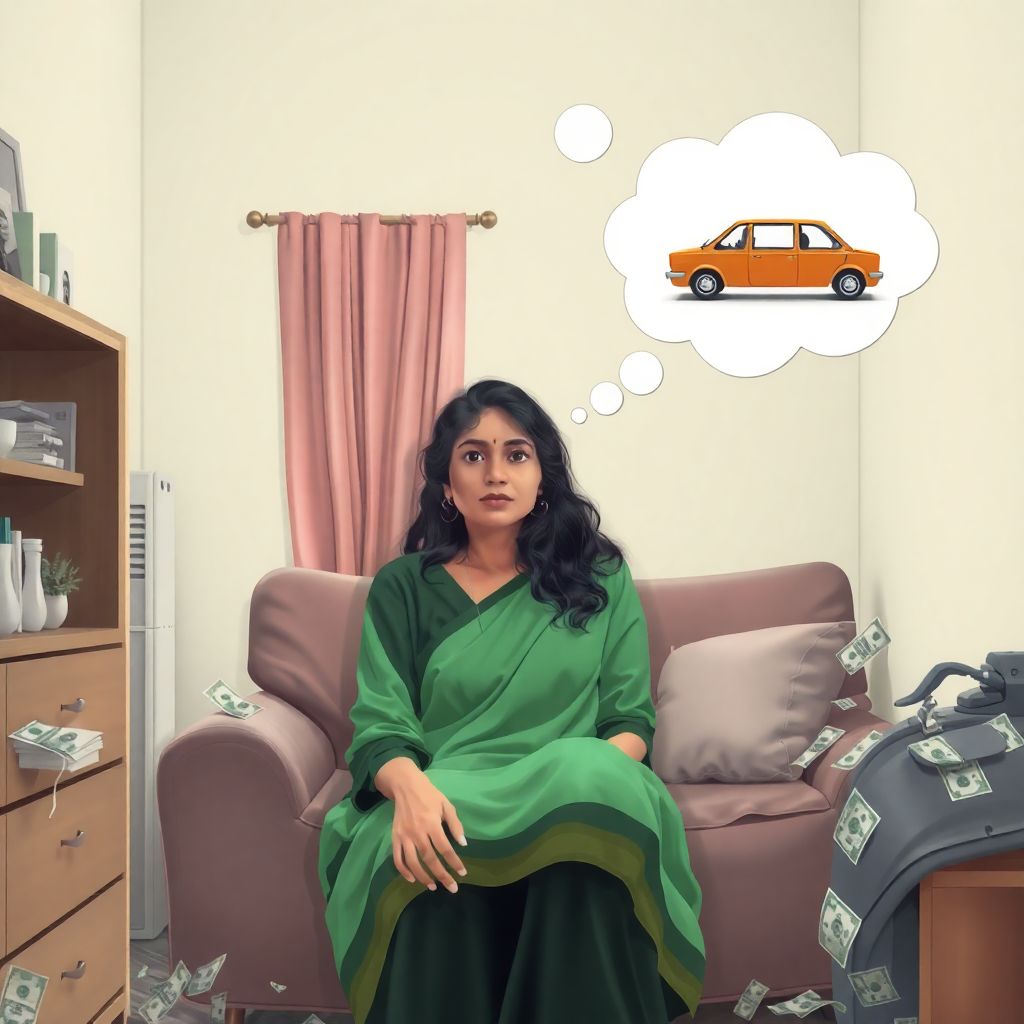
Starting From Debt and Zero Assets: Rebuilding Your Financial Life From Scratch
I’m a 28‑year‑old woman living in India. For the past decade, my family has been hit by one crisis after another: the loss of the primary breadwinner’s job and serious health issues affecting several relatives. All of this has snowballed into debt of about 21,500 USD.
Where I live, a relatively good salary is around 500-600 USD a month, and I’m still at least two years away from starting to earn an income myself. We don’t own a house, a car, or any other asset. A modest home would cost around 40,000 USD, and even the most basic car would be at least another 10,000 USD.
Whatever my family members currently bring in is immediately swallowed up by rent, groceries, and ongoing medical expenses. There’s nothing left over at the end of the month. No savings, no investments, no emergency fund. It feels like we are stuck in a loop of survival with no way forward.
The question that haunts me is simple: how do I change this situation when I’m starting from debt, with zero assets and no income yet?
—
Step 1: Understand Your Actual Starting Point
When everything feels overwhelming, “we’re in debt and broke” sounds accurate-but it’s not specific enough to act on. The first real step is to measure your exact position, even if the numbers scare you. That means clearly listing:
– The total debt: 21,500 USD
– Who the debt is owed to (banks, relatives, private lenders, credit cards, etc.)
– Interest rates on each loan
– Minimum monthly payments
– Which debts are urgent (high interest) and which are more flexible
This exercise does not magically reduce the debt, but it turns a vague crisis into a defined problem. A defined problem can be broken into steps; an undefined one just feels like a dark cloud.
If possible, do the same with monthly expenses: rent, medical costs, food, utilities, transportation, and any small but regular outgoings. Even in a tight budget, it’s common to find a few leaks-subscriptions, unnecessary fees, or inefficient spending-that can free up at least a little cash flow.
—
Step 2: Accept That the Path Is Long-but Not Impossible
With local salaries of 500-600 USD a month and a debt of over 21,000 USD, you are not going to “fix” this in a year or two. That’s the hard truth. The good news is that many people have started from worse financial situations and slowly worked their way not only out of debt but into stability and eventually real wealth.
The mindset shift is crucial:
– This is not a short sprint; it’s a 7-15 year journey.
– Your goal is not instant comfort; it’s long‑term independence.
– Every small improvement-an extra 10 USD saved, a small skill acquired, a side income of 50 USD per month-matters and compounds over time.
Once you stop expecting a miracle solution, you can focus on consistent, unglamorous actions that actually work.
—
Step 3: Use the Next Two Years Strategically
You mentioned you won’t be earning for another two years. Those two years can either be dead time, or they can become the period when you quietly build the foundation that will change your life.
Ask yourself: by the time I start earning, what do I want to have:
– In terms of skills?
– In terms of certifications or qualifications?
– In terms of professional connections and references?
– In terms of a plan for income and debt repayment?
Treat these years as an unpaid but critical preparation phase. Focus on:
1. High‑value skills that fit your reality
Depending on your education level, language skills, and access to a computer or smartphone, consider learning:
– Basic to advanced English communication (if not already strong)
– Data entry, transcription, or virtual assistance
– Coding (even basic web development), if you have the aptitude
– Graphic design, video editing, or social media management
– Accounting basics or bookkeeping
These are skills that can be monetized remotely and often do not require a formal degree, especially if you can show a portfolio or do small freelance gigs.
2. Certification and proof of competence
Free or low‑cost online courses, sample projects, mock assignments, and participation in small freelance tasks can give you practical experience. When you eventually apply for jobs, being able to say “I have done X, Y, Z projects” is more powerful than simply listing what you studied.
—
Step 4: Search for Any Possible Early Income, Even Before Full‑Time Work
You may not be able to take on a full‑time job right now, but that doesn’t mean you must earn zero. In a situation where every dollar counts, even 20-50 USD a month can be a meaningful psychological and financial shift.
Possible options include:
– Tutoring: If you are strong in any academic subject or in English, consider tutoring school students locally. Even a small fee per hour adds up.
– Freelance micro‑tasks: Data entry, transcription, simple content writing, or basic design work can sometimes be done on a flexible schedule.
– Local services: Helping with exam prep, basic computer training, or offering assistance to small local businesses (social media posts, updating menus or flyers) can earn modest but real income.
Your first earnings may feel tiny compared with the size of your family’s debt, but symbolically they are huge: they prove to you that your skills can generate money and that your role in the family’s finances is changing.
—
Step 5: Work With Your Family, Not Against Them
When a family is under financial and health stress, emotions run high. People may feel ashamed, defensive, or hopeless. Still, it’s important to open up a calm, practical conversation about money and roles.
Consider gently raising topics like:
– Can any high‑interest loans be refinanced, consolidated, or negotiated down?
– Are there any expenses that could be reduced without harming health or safety?
– Can responsibilities be divided so that you have dedicated time to study, build skills, or earn part‑time?
You are not solely responsible for fixing everything, especially at 28 with no income yet. But you can be the person who brings structure to the chaos-organizing information, making lists, tracking repayments, and suggesting more strategic decisions.
—
Step 6: Prioritize Financial Stability Over Status Purchases
It is natural to dream of buying a house and a car when you see that an average home costs 40,000 USD and a car another 10,000 USD. But given your current situation, those cannot be near‑term goals. Trying to chase them too early will trap you in even more debt.
Your actual order of priorities could look like this:
1. Stabilize income (your own earnings + family income as predictable as possible).
2. Build a tiny emergency buffer (even 200-500 USD makes a difference).
3. Aggressively pay down the highest‑interest debts.
4. Only after that, start thinking about long‑term goals like owning property.
A house and a car are not just purchase prices; they bring ongoing costs-maintenance, insurance, repairs, taxes. Right now your most valuable “asset” is not a thing, but your future earning power. Every effort should be focused on increasing that.
—
Step 7: Learn Basic Personal Finance and Protect Yourself From Future Traps
When you grow up in a household that’s constantly struggling, you often never get to see healthy money habits in action. That’s not your fault-but it is now your responsibility to break the pattern.
Key principles worth internalizing:
– Avoid high‑interest consumer loans whenever possible. They keep you poor.
– Separate “needs” from “wants.” Medical care, food, and safe housing are non‑negotiable; brand names, upgrades, and status purchases are not.
– Track your money. Even a simple notebook where every expense is written down can transform your awareness.
– Think in terms of long‑term cost, not monthly installments. A cheap‑looking monthly EMI can quietly eat your future.
Learning even the basics of budgeting, interest, and investing (once you’re past survival mode) will put you ahead of many people who earn more but never manage their money well.
—
Step 8: Prepare Yourself Emotionally for the Journey
Financial hardship is not just about numbers. It impacts your mental health, sense of self‑worth, and relationships. You may feel guilt for not contributing yet, anger at how life turned out, or jealousy when you see peers who didn’t face the same hardships.
None of these emotions make you a bad person-they make you human. But if they control you, they can paralyze you. To move forward:
– Remind yourself that your value is not defined by your current bank balance.
– Separate what you can control (skills, effort, decisions) from what you cannot (past events, global economy, family health problems).
– Set very small, achievable goals so you regularly experience a sense of progress.
Progress might look like: “I completed one course,” “I earned my first 10 USD,” “I understood exactly how much interest we pay each month.” These small wins counter the feeling of being stuck.
—
Step 9: Imagine a Realistic, Better Future-Then Reverse‑Engineer It
Instead of only thinking, “We are in 21,500 USD debt and have nothing,” try to create a picture of a realistic, improved life 10-15 years from now. For example:
– You have a stable job or freelance career earning significantly more than 500-600 USD per month.
– The family debt is either fully paid off or reduced to a manageable, low‑interest balance.
– There is at least a basic emergency fund.
– You are renting a decent place without fear of eviction, and medical costs, while still present, are somewhat under control.
Once you have that picture, think backward:
– What must be true in 7 years for that 15‑year outcome to happen?
– What must be true in 3 years for that 7‑year step to be possible?
– What must you start doing this year to enable the 3‑year step?
This back‑planning approach turns a vague dream into a sequence of yearly and monthly actions.
—
Step 10: Accept That “Starting From Zero” Is Harsh-but Also Clarifying
You are not starting from a neutral point; you are starting from below zero, with debt and no assets. That’s harsh and unfair. But it also means something powerful: you have almost nothing to lose and a lot to gain.
You are being forced, early in life, to learn discipline, resilience, and conscious decision‑making about money. Many people postpone those lessons until later-and pay a much higher price for that delay.
If you use the next two years to build skills, if you slowly create income streams, and if you deliberately avoid the traps that created this situation, you can write a very different story for your 30s and 40s. It will not be easy or quick, but it will be possible.
You may be starting from debt and zero assets-but you are not starting from zero potential. The work you put in now can become the foundation for a life far more stable and free than the one you grew up in.