
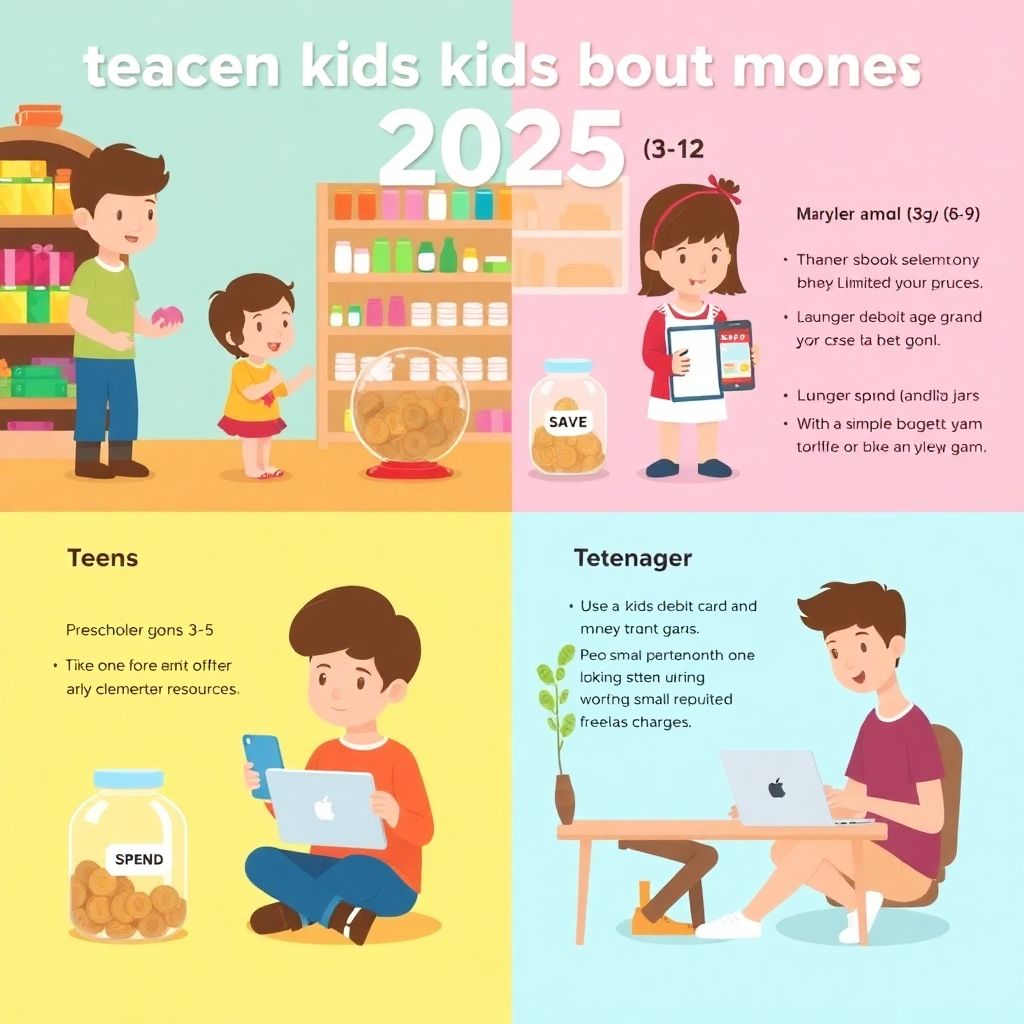
Why Teaching Kids About Money Looks So Different in 2025
From Piggy Banks to Phone Screens: короткий взгляд назад
A hundred years ago “money lessons” were mostly about not wasting coins and paying debts on time. Parents talked about thrift, not about credit ratings or in‑app purchases. Through the second half of the 20th century came pocket money, savings accounts, and the idea that kids should “earn” their allowance. By the 1990s and 2000s, schools slowly added basic personal finance, but it was often a one‑semester elective that many teens never saw.
Today, kids manage digital wallets before they can write in cursive. That shift changed everything: how we explain value, what “saving” looks like, and how fast a mistake can become expensive. Teaching kids about money in 2025 is no longer a side topic; it’s survival training for a world of subscriptions, micro‑payments, and algorithms quietly nudging our spending.
Historical lessons we should actually keep
For all the fintech glitter, some old‑school habits still work frighteningly well. The classic piggy bank taught three things at once: money is finite, it accumulates slowly, and once spent, it’s gone. That tactile feedback is exactly what many digital tools fail to give. Historical records from the 19th and early 20th century show how mutual savings banks and school “thrift clubs” helped children link small, regular deposits to big future goals, like education or migration. The core idea hasn’t aged: repeated small choices matter more than rare big ones.
So when we design modern financial literacy for kids courses or home routines, it’s worth asking: does this app, chore system, or gadget give a child the same sense of consequence that a heavy coin jar once did? If not, the technology is decoration, not education.
—
Age‑Appropriate Money Lessons: от детского сада до старшей школы
Preschool (3–5): from “mine” to “we”

At preschool age, you’re not teaching compound interest; you’re translating money into everyday choices. A simple game at the grocery store — picking one treat out of three options — already lays the foundation: limited resources, trade‑offs, waiting. Short, concrete phrases work: “We have enough for apples or juice, not both.”
This is also the right moment to start naming money as a tool, not a prize. Instead of “Grandma gave you money because you’re good,” try “Grandma gave you money so you can decide what to buy later.” It sounds subtle, but you’re avoiding the trap where self‑worth gets tied to cash and gifts.
Early elementary (6–9): first allowance, first rules
Once a child can add and subtract with some confidence, money becomes math in motion. This is where a small, regular allowance shines. Historically, pocket money began as a way to imitate adult wages; in 2025, it’s a lab for testing choices. One powerful tweak is to divide everything that comes in into three containers or digital “buckets”: spend, save, share.
Here technology can help or hurt. A simple app that mirrors three jars on the screen can support the habit, but if the interface is crowded with ads, rewards, or crypto pop‑ups, the child’s attention drifts from values to novelty. The rule of thumb: if you wouldn’t print it on the side of a piggy bank, don’t put it on a kid’s finance app.
Tweens (10–12): budgeting and first digital money
Around middle school, abstract thinking kicks in, and suddenly “next month” and “next year” are real for many kids. This is the ideal time to introduce a basic budget linked to their own goals: a game, a bike, a trip. Instead of lecturing, co‑create a plan: estimate cost, choose a saving rate, track progress weekly. The payoff is less about the final purchase and more about discovering that patience changes what is possible.
Because many families now use kids’ debit cards, this age group also needs a gentle initiation into digital risk. Show them how an automatic subscription works, including how to cancel it. Walk through a real bank statement together and point out where small repeated charges quietly add up. A short, honest look at your own “oops” moments online can be a more powerful warning than any formal lesson.
Teens (13–18): real stakes, real responsibility

Teenagers are ready — and usually eager — to connect money with independence. Historically, this is when part‑time jobs, summer work, or family businesses played a big role. In 2025, income might also come from freelance design, tutoring online, or content creation. The money feels more “theirs,” which makes it a perfect entry point to taxes, contracts, and long‑term goals.
Here, teen financial education classes online can complement life experience, especially in schools that still under‑deliver on personal finance. A good course won’t just explain interest rates; it will force students to run scenarios: “What happens if I borrow for a car at 8% versus saving first? How does a missed payment hit my credit history?” When teens see numbers telling a story they care about — moving out, travel, entrepreneurship — the theory sticks.
—
Comparing Approaches: семейные разговоры, школы, онлайн‑курсы
Family‑based learning vs. formal courses
Most adults still learn money habits first at home: how their parents talk about bills, argue about spending, or react to financial stress. Family‑based learning is flexible and deeply personalized; you know your child’s temperament and can pace lessons to their curiosity. It’s also free and can start very early, long before any curriculum kicks in.
The downside is patchiness. If parents are anxious, secretive, or themselves lost in debt, kids often inherit not knowledge but silence and fear. That’s where structured financial literacy for kids courses can plug the gaps. A solid program builds from simple earning and saving to debt, investing, and consumer rights, with exercises rather than just lectures. The sweet spot is not “either–or” but collaboration: parents reinforcing at home what kids practice in class, turning assignments into real decisions about pocket money or purchases.
Books, games and online programs: кто выигрывает
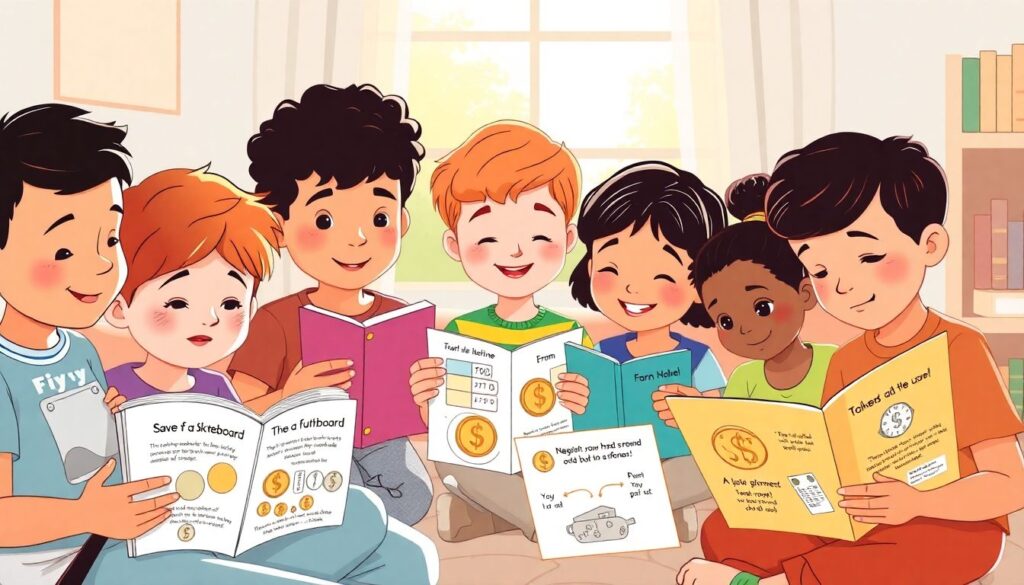
There’s a quiet renaissance of children’s finance books happening. The best books to teach kids about money mix stories, humor, and real numbers. A character saves for a skateboard, runs into a scam, or negotiates pay for chores; your child sees themselves in the plot. Books win on depth and calm: no pop‑ups, no notifications, just space to think.
On the other side, a money management for kids online program can simulate things books can’t: market ups and downs, changing interest rates, or the consequences of forgetting to pay a bill. Interactive dashboards, role‑playing games as “family CFO,” or virtual shops make abstract concepts tangible. The competitor here is distraction: many platforms are busy chasing engagement metrics, not understanding. When comparing, ask: does this program encourage reflection, or is it just another game with coins instead of gems?
—
Technology: плюсы, минусы и здравый смысл
Преимущества цифровых инструментов
In 2025, it’s easier than ever to give a 9‑year‑old a safe debit card, monitor transactions in real time, and set spending categories with a swipe. For parents, that means transparent oversight without constant nagging. For kids, it creates a bridge between real‑world decisions and instant feedback: “I chose snacks over saving; now I’m further from my goal.” That loop, repeated dozens of times, can build intuition faster than any worksheet.
Digital tools also democratize access. A family in a small town with no local workshops can enroll in teen financial education classes online, watch case studies from around the world, and practice with realistic simulators. For children with ADHD or learning differences, apps that chunk information and offer visual aids often work better than dense textbooks. Done right, technology lets each child learn at their own pace while still feeling guided.
Риски: от коммерциализации до потери контекста
The flipside is that many “kid‑friendly” finance apps are built by companies whose main goal is data and profit. Gamified rewards can slide into nudging more spending; “partner offers” can normalize constant consumption. When every lesson about saving is wrapped in branded content, children may quietly absorb that money exists mainly to buy, not to choose wisely.
There’s also a subtler risk: losing the feel of money. Tapping a screen doesn’t carry the same weight as handing over a crumpled banknote you counted yourself. If all learning is digital, kids may excel at moving numbers between accounts but struggle to sense when a purchase is “big” in terms of household impact. That’s why even the most modern allowance and budgeting tools for children work best when they keep some tactile elements — coins, jars, paper trackers — especially in the early years.
—
Как выбрать подход: практические рекомендации для 2025 года
Подбираем методы под возраст и характер
When choosing how to teach your child about money, start with three filters: age, personality, and your own bandwidth. A curious 7‑year‑old who loves stories might thrive on nightly reading from a child‑friendly finance book plus a simple weekly allowance. A more impulsive tween may need visual progress bars and short, frequent check‑ins using a basic app to see their savings grow.
Instead of hunting for a perfect system, think in “seasons.” For six months, you might focus on earning and chores; the next season, on saving for a shared family goal like a trip; after that, on generosity and donations. Rotate tools too. Maybe you combine a classic jar system with one carefully chosen platform that functions almost like a guided game. Revisit the setup twice a year: what is your child actually using, and what has turned into digital clutter?
На что смотреть в курсах и онлайн‑программах
If you’re considering structured help, look under the hood. For financial literacy for kids courses, check whether they explicitly address digital life: in‑game purchases, influencer marketing, “buy now, pay later,” and subscription traps. A curriculum stuck in the 1990s — checks, theoretical budgets, no mention of algorithms — is already outdated.
For a money management for kids online program, look for transparency: clear pricing, no hidden in‑app purchases, and strong data protection. Explore a demo together with your child and see how many minutes it takes before the software tries to sell something. Ideally, progress depends on understanding, not on constant leveling up through spending. And if a provider claims to “guarantee rich kids,” you can safely close the tab; serious education teaches tools and trade‑offs, not fantasies.
—
Тенденции 2025: куда движется детская финансовая грамотность
Инвестиции, устойчивость и цифровая репутация
Three big trends are reshaping how we talk to kids and teens about money in 2025. First, micro‑investing is going mainstream for minors. Parents can open accounts where small amounts flow into diversified funds. This creates opportunities and responsibilities: kids can watch real portfolios rise and fall, but they also need clear warnings against “hot tips” and speculative trading disguised as entertainment.
Second, teens increasingly connect money with ethics and climate. They ask where brands source materials, how workers are treated, what a company’s emissions look like. Teaching money now includes explaining shareholder votes, boycotts, and the trade‑off between short‑term profit and long‑term impact. Third, digital footprints around money are getting thicker. Late payments, scam involvement, and even public crowdfunding behavior can follow a young person for years. Helping teens see that financial choices also shape their online reputation may be as important as teaching them to avoid phishing links.
Школы, семьи и рынок: новая экосистема обучения
Looking ahead, the most promising models blend classroom structure, home practice, and high‑quality digital tools instead of isolating them. Schools experiment with project‑based units where students design a mini‑business, track income and expenses, and present results. Families mirror that by discussing real household trade‑offs: why a vacation means delaying gadget upgrades, how a mortgage works, what an emergency fund is for.
Around this ecosystem, a growing industry of apps, books, and platforms competes for attention. That competition can raise quality — more engaging stories, better simulations, richer teen financial education classes online — but only if parents, educators, and even kids themselves learn to be critical consumers. The goal isn’t to raise tiny executives obsessed with profit. It’s to grow citizens who can look at a tempting offer, an emotional ad, or a shiny new app and calmly ask: “What does this cost me now, and what might it cost me later?” When a child can do that at 15, the seeds planted back in the piggy‑bank years have done their job.