
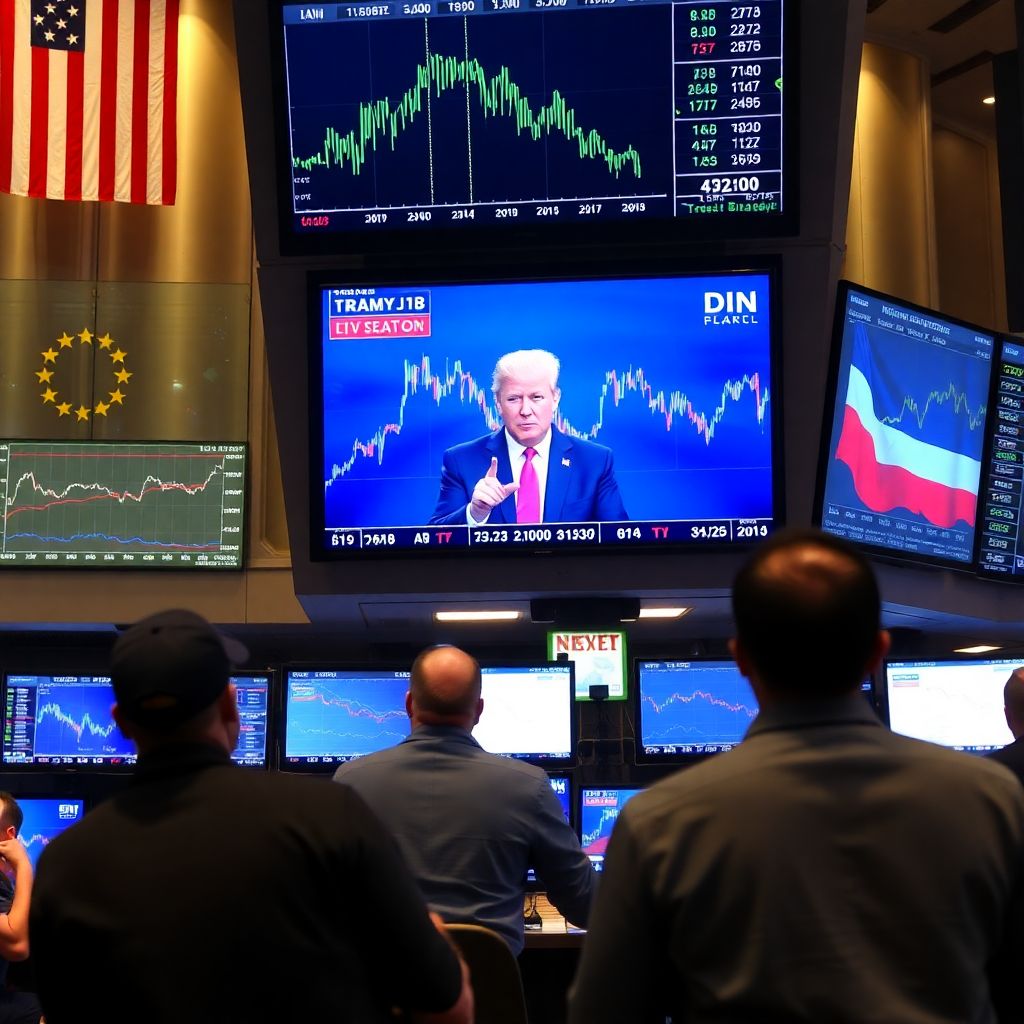
Trump’s escalation against Iran is not just a geopolitical flashpoint; it is another shockwave for global government debt markets, according to analysts at UBS. The investment bank warns that the latest US action heightens uncertainty in a world already struggling with record sovereign borrowing, fragile investor confidence, and historically low interest rates.
From UBS’s perspective, the core problem is simple: every new geopolitical flare‑up piles additional risk onto a system saturated with debt. Investors holding government bonds must suddenly reprice the likelihood of conflict, sanctions, trade disruptions, and energy shocks. In such an environment, even a tweet or unannounced strike can trigger a sharp move in yields, unsettle currency markets, and force central banks to rethink their strategies.
Trump’s stance on Iran amplifies this pattern. Tensions between Washington and Tehran raise the risk of instability in the Middle East, a region central to global energy supplies. A spike in oil prices can quickly morph into broader inflationary pressures, complicating the work of monetary authorities that have kept borrowing costs low to sustain growth. UBS warns that this combination – high public debt, geopolitical risk, and the prospect of higher inflation – is particularly toxic for long‑dated government bonds.
Normally, when global tensions rise, investors rush into safe‑haven assets like US Treasuries, German Bunds, or Japanese government bonds, pushing yields down. But UBS points out that the current backdrop is more nuanced. On one hand, the fear trade boosts demand for perceived safe government debt. On the other, growing fiscal deficits, aggressive issuance, and unconventional monetary policy have left many investors questioning how “safe” this debt truly is over the long term. The result is increased volatility rather than a stable, one‑directional move.
Trump’s Iran policy also interacts with US fiscal dynamics in a critical way. Military operations, heightened defense spending, and emergency deployments do not come free. Even limited campaigns can add billions of dollars to an already swelling federal deficit. With Washington running large budget gaps during an expansionary phase of the economic cycle, UBS warns that additional unplanned spending could accelerate concerns about debt sustainability, especially if growth slows.
Another issue flagged by UBS is the shifting profile of the buyers of government debt. For years, central banks and foreign sovereign investors absorbed large portions of US and other advanced‑economy bonds. But as trade disputes, sanctions policies, and geopolitical rivalries intensify, some foreign governments may be less willing to keep increasing their holdings of another country’s debt. Tensions with Iran, and broader frictions in the region, fit into this pattern of fragmenting global financial relationships.
At the same time, domestic investors face a different dilemma. Ultra‑low yields have already pushed pension funds, insurers, and asset managers into riskier assets in search of return. When a geopolitical shock hits, they may rotate back into government bonds, but their capacity to do so is not unlimited, especially when valuations look stretched. UBS suggests that these dynamics could produce sudden, sharp swings in demand – and therefore in yields – as markets lurch between fear and fatigue.
The uncertainty around Iran also highlights how quickly market narratives can change. In one scenario, heightened tensions lead to a full‑blown risk‑off move, supporting government bond prices and driving yields lower. In another, if the conflict leads to higher energy prices and sustained inflation fears, bond markets may sell off on expectations of tighter monetary policy or a risk premium for holding long‑term debt. For UBS, the crucial point is that these conflicting forces make government bonds less predictable than many investors assume.
For policymakers, this creates a complicated balancing act. Central banks have limited room to cut rates further, and many have already experimented with quantitative easing, yield‑curve control, and negative rates. If geopolitical shocks from events like Trump’s move against Iran erode confidence in government bonds, central banks may be forced to expand their role even more, buying more debt to stabilize markets. That, in turn, raises questions about central bank independence and the long‑term credibility of monetary policy.
Investors, meanwhile, are being pushed to rethink traditional safe‑haven strategies. UBS encourages clients to consider the composition and duration of their sovereign bond holdings, especially exposure to long‑term debt issued by heavily indebted governments. Shorter maturities, inflation‑linked securities, and a more diversified mix of currencies may offer better protection against sudden yield spikes or unexpected inflation stemming from geopolitical tensions.
Another point underlined by UBS is the cumulative nature of recent shocks. Trump’s Iran decision does not occur in isolation: it layers onto trade wars, populist politics, slowing global growth, and already‑elevated public borrowing. Each individual event may appear manageable, but together they raise the probability of a broader repricing of risk in the sovereign bond market. The more frequently markets are hit by such jolts, the more nervous investors become about the next one.
There is also a structural angle. When governments rely heavily on bond markets to finance persistent deficits, they become more sensitive to shifts in investor sentiment. A series of geopolitical missteps can therefore carry direct financial consequences. If bond buyers start demanding higher yields as compensation for political risk, the cost of servicing existing debt climbs. Over time, that can crowd out other public spending, forcing difficult political choices on taxes, social programs, and investment.
Beyond the immediate market reaction, UBS stresses the importance of scenario planning. Investors and policymakers should ask what happens if tensions with Iran escalate into a broader regional conflict, or if diplomatic efforts suddenly succeed and sanctions are eased. Each path has distinct implications for oil prices, inflation, growth, and government financing needs. Relying on a single forecast is dangerous; stress‑testing portfolios against multiple geopolitical outcomes is now essential.
The situation also illustrates how globalized and interconnected debt markets have become. A decision taken in Washington about Iran can influence bond yields in Europe, Asia, and emerging markets within hours. Countries with large external financing needs, especially those issuing dollar‑denominated debt, are particularly exposed to shifts in US yields and risk sentiment driven by geopolitical developments. According to UBS, this interconnectedness amplifies the systemic risk created by recurring political shocks.
In the medium term, frequent episodes like this one may change how governments themselves think about debt. Facing more volatile markets, treasuries could seek to diversify their investor base, extend or shorten their maturity profiles, or experiment with new instruments such as green bonds or inflation‑linked notes to attract more stable holders. However, these technical adjustments do not remove the core vulnerability: a high‑debt world remains deeply exposed to political decisions that are often made with little regard for financial stability.
For individual investors, the key takeaway from UBS’s warning is not to panic, but to recognize that the old assumption – government bonds are always the ultimate safe asset – is being tested. Geopolitics, including Trump’s confrontational approach to Iran, adds a layer of complexity that can no longer be ignored in portfolio construction. Risk management now requires paying as much attention to foreign policy and defense headlines as to economic data releases.
In sum, Trump’s action against Iran is more than a brief news flash; it is another tremor in a global system built on vast amounts of government debt. UBS cautions that each new geopolitical shock increases the strain on this system, contributing to more frequent and pronounced “wobbles” in sovereign bond markets. Whether these remain temporary jolts or eventually trigger a deeper reckoning will depend on how governments manage both their foreign policy and their balance sheets in the years ahead.