
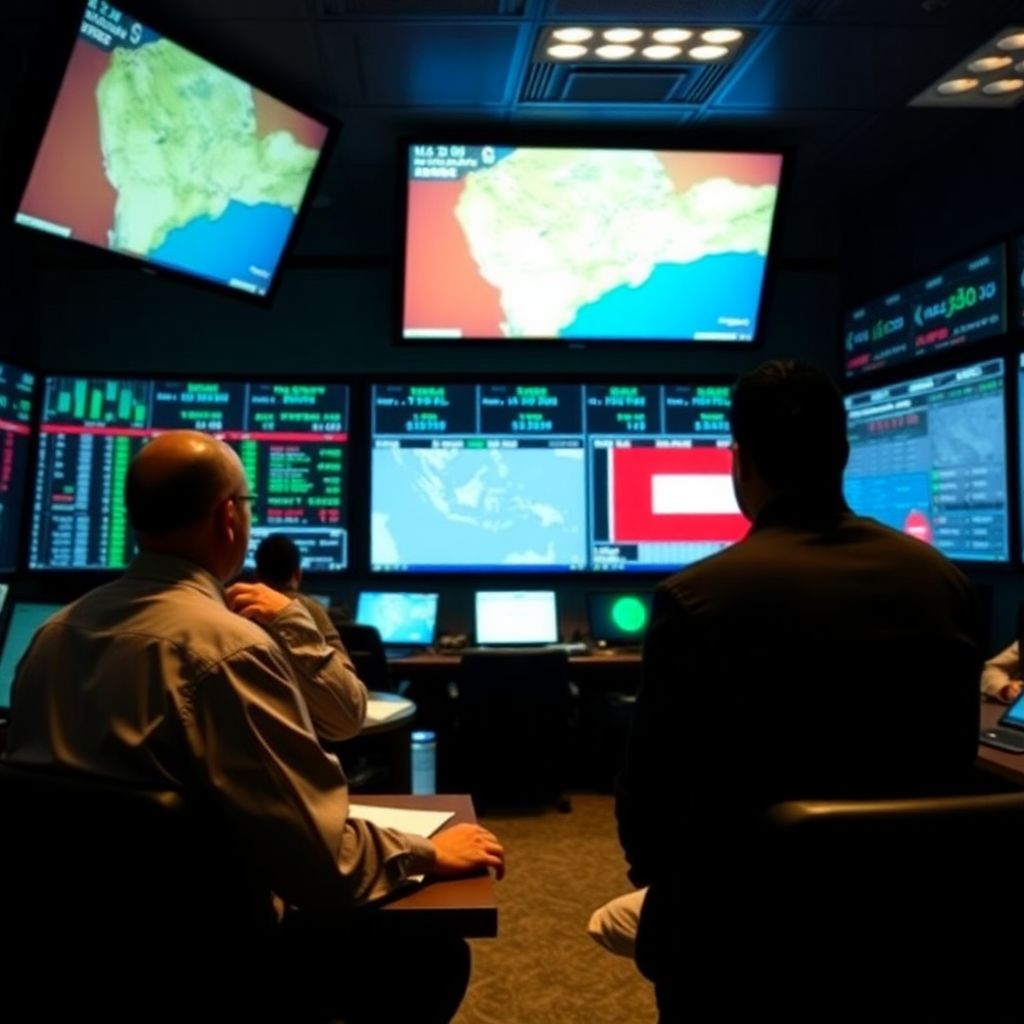
How Unknown Traders Cashed In on the Iranian Strike Just Hours Before It Began
In the hours leading up to a series of Iranian strikes in the Middle East, a small group of anonymous traders placed unusually large and precisely timed bets on financial markets that stood to move sharply if military action occurred. When missiles were launched and tensions abruptly spiked, those positions surged in value, leaving a clear question in their wake: did someone know in advance?
These trades did not look like random speculation. They were concentrated in assets that historically react to geopolitical shocks: oil futures, defense-sector stocks, regional currency pairs, and volatility instruments. The size of the positions sharply exceeded normal pre-event activity, and the timing was uncomfortably close to the moment the strikes began. To many market observers, it resembled a textbook case of someone quietly monetizing sensitive, non-public information.
How the Bets Were Placed
The traders used a mix of instruments that all had one thing in common: they were highly leveraged ways to profit from sudden instability. Among them were:
– Short-dated call options on oil and energy companies, which can deliver outsized gains from even modest price jumps.
– Contracts for difference and futures tied to crude oil benchmarks, which react immediately to fears of supply disruption.
– Options and derivatives on defense contractors, which often rally when military spending or conflict risk is perceived to be rising.
– Trades linked to volatility indices and safe-haven assets that tend to gain when investors rush out of riskier markets.
By focusing on short-dated instruments, the traders maximized sensitivity to immediate news. That design makes sense only if you expect something significant to happen within hours or days-not months. When the strikes were reported, energy prices climbed, volatility spiked, and defense stocks caught a bid. Positions that had looked obscure and risky just hours earlier suddenly became extremely profitable.
The Pattern That Raised Suspicion
Isolated lucky trades are normal in financial markets. What drew scrutiny here was the convergence of three red flags:
1. Timing – Orders were placed unusually close to the eventual strike, rather than in a broad window of generalized tension.
2. Concentration – The bets clustered specifically in assets directly exposed to Middle East risk, not in a diversified set of speculative plays.
3. Size and Leverage – Position sizes, and the degree of leverage used, seemed disproportionate for a routine hedge or casual speculation.
Analysts reviewing the flows noticed that trading volumes in certain options chains and futures contracts jumped well beyond typical levels for that time and date. The open interest in specific short-term options exploded, then collapsed as traders closed positions quickly after the news broke, locking in profits before the market normalized.
Why Geopolitical Events Create Trading Opportunities
Geopolitical shocks alter expectations about growth, inflation, supply chains, and security. Markets reprice that information almost instantly. For example:
– A strike in or near a key oil-producing region can trigger immediate concerns about supply disruptions, pushing crude prices higher.
– Heightened military conflict may spark expectations of increased defense spending, benefiting certain companies and sectors.
– Investors may flee riskier assets, moving capital into perceived safe havens like certain currencies, bonds, or commodities.
Most traders must guess about the likelihood and timing of such events. They look at diplomatic signals, troop movements, and rhetoric, then price in different scenarios. But someone with advance, confidential knowledge of a decision to launch strikes holds an enormous advantage: they can build positions that only make sense if the event is not merely possible, but imminent.
The Shadow Line Between Informed and Illegal
Not every profitable trade around a geopolitical shock is illegitimate. Macro-focused hedge funds and sophisticated traders constantly weigh probabilities and place directional bets based on public information. They might not know *what* will happen, only that markets are underpricing the chance of escalation.
The issue arises when trading is based on privileged, non-public information: for instance, knowledge obtained through government channels, military planning documents, or private briefings. In many jurisdictions, using such information may fall under insider trading, market manipulation, or national security statutes, especially if the trader has access due to their official role or connections.
Unlike traditional corporate insider trading, where regulators look for leaks around earnings or mergers, geopolitical insider trading is notoriously harder to police. Decisions may involve classified material, cross-border coordination, and informal networks. Tracing who knew what, and when, often collides with secrecy laws and political sensitivities.
How Anonymous Traders Hide Their Tracks
Modern markets provide powerful tools not only to make bets but also to obscure who is behind them. Traders aiming to stay invisible can:
– Route orders through multiple brokers and jurisdictions to fragment the audit trail.
– Use offshore entities or shell companies that separate their personal identity from trading activity.
– Trade in over-the-counter derivatives, where transparency is more limited than on public exchanges.
– Deploy algorithmic strategies that mask timing and intent by blending questionable trades into a stream of routine orders.
Even when regulators detect suspicious positions, unmasking the person or group that ultimately controlled the trades can require cooperation across countries, access to banking records, and the ability to pierce corporate veils. In politically sensitive cases, such cooperation may be incomplete or delayed.
Why These Episodes Are So Hard to Prosecute
Proving that a trader had illegal advance knowledge is far more challenging than merely demonstrating that they were profitable. Enforcement agencies must typically show:
– The information was non-public and material.
– The trader obtained it through a prohibited channel (for example, a government insider or an intelligence leak).
– There is a link between the source of the information and the trading decisions.
– Intent: that the person knowingly exploited that privileged knowledge for personal gain.
In the context of foreign military action, many of those elements are shrouded in secrecy. Governments may resist disclosing internal communications that could reveal sources and methods. Witnesses may be outside the jurisdiction of the investigating authority. And in some cases, those with knowledge are themselves part of the state apparatus, complicating any attempt at neutral legal proceedings.
Financial Markets as an Intelligence Signal
Episodes like these highlight an unusual reality: money flows can act as an early-warning system for geopolitical events. Intelligence analysts often monitor:
– Sudden spikes in trading volumes for region-specific assets.
– Unusual demand for implied volatility or downside protection in a particular market.
– Concentrated bets that only pay off under a narrow set of geopolitical scenarios.
While markets frequently generate false alarms-people speculate on crises that never materialize-persistent patterns of eerily well-timed trades can prompt deeper investigation. In some cases, suspicious financial activity has helped expose broader networks involved in sanctions evasion, corruption, or espionage.
The Ethical Dimension: Profiting From Conflict
Beyond legality lies a more uncomfortable moral question: should anyone be allowed to profit directly from foreknowledge of violence or destruction? When anonymous traders earn fortunes from missile strikes, bombings, or invasions, it can erode public trust in both political institutions and markets.
Critics argue that such behavior turns human suffering into a tradable event and creates perverse incentives for those positioned closest to decision-makers. Even if no laws are formally broken, the optics are corrosive. Supporters of unfettered markets counter that price discovery, however harsh, is an inevitable feature of a global financial system in which every major development has economic consequences.
This tension underscores the need for clearer rules and stronger enforcement around the use of sensitive geopolitical information in trading, particularly for individuals with access to classified briefings, diplomatic cables, or confidential military planning.
What Regulators Could Do Differently
To reduce the chances of anonymous profiteering from secret military or diplomatic decisions, authorities could:
– Expand the definition of prohibited insider information to explicitly include classified geopolitical intelligence in certain contexts.
– Strengthen monitoring of trading patterns around known flashpoints and sensitive decision windows.
– Improve cross-border cooperation to share data, unmask beneficial owners, and track suspicious flows through offshore jurisdictions.
– Impose stricter trading restrictions or disclosure requirements on officials and contractors with access to high-level security information.
Enhanced technology-such as pattern-recognition algorithms and real-time surveillance systems-can help identify anomalies faster, but these tools must be matched with clear legal frameworks and the political will to pursue complex, transnational cases.
Lessons for Ordinary Investors
For everyday market participants, sensational stories of perfectly timed bets can be both tempting and misleading. It is important to distinguish between:
– Responsible risk management and speculation based on public analysis of global tensions.
– Dubious strategies that rely on rumors, leaks, or vague promises of “inside information.”
– Narratives that exaggerate the prevalence of secret knowledge to sell products, courses, or trading schemes.
Most investors are better served by building resilient, diversified portfolios that can weather volatility, rather than trying to mimic the tactics of shadowy traders who may be playing a very different-and potentially illegal-game.
A Glimpse Into the Dark Edge of Global Markets
The anonymous bettors who reportedly profited from the Iranian strike in the hours before it occurred reveal an unsettling intersection of war, secrecy, and finance. Whether their actions will ever be conclusively proven unlawful, they underscore how vulnerable markets are to those who sit close to the flow of highly sensitive information.
As long as decisions about military action remain confidential until the moment they are executed, and as long as global markets instantly reprice that information in real time, the temptation to quietly monetize foreknowledge will persist. The challenge for regulators, policymakers, and the public is to decide where the line should be drawn-and how forcefully it should be defended-between informed judgment and the exploitation of events that put lives at risk.