
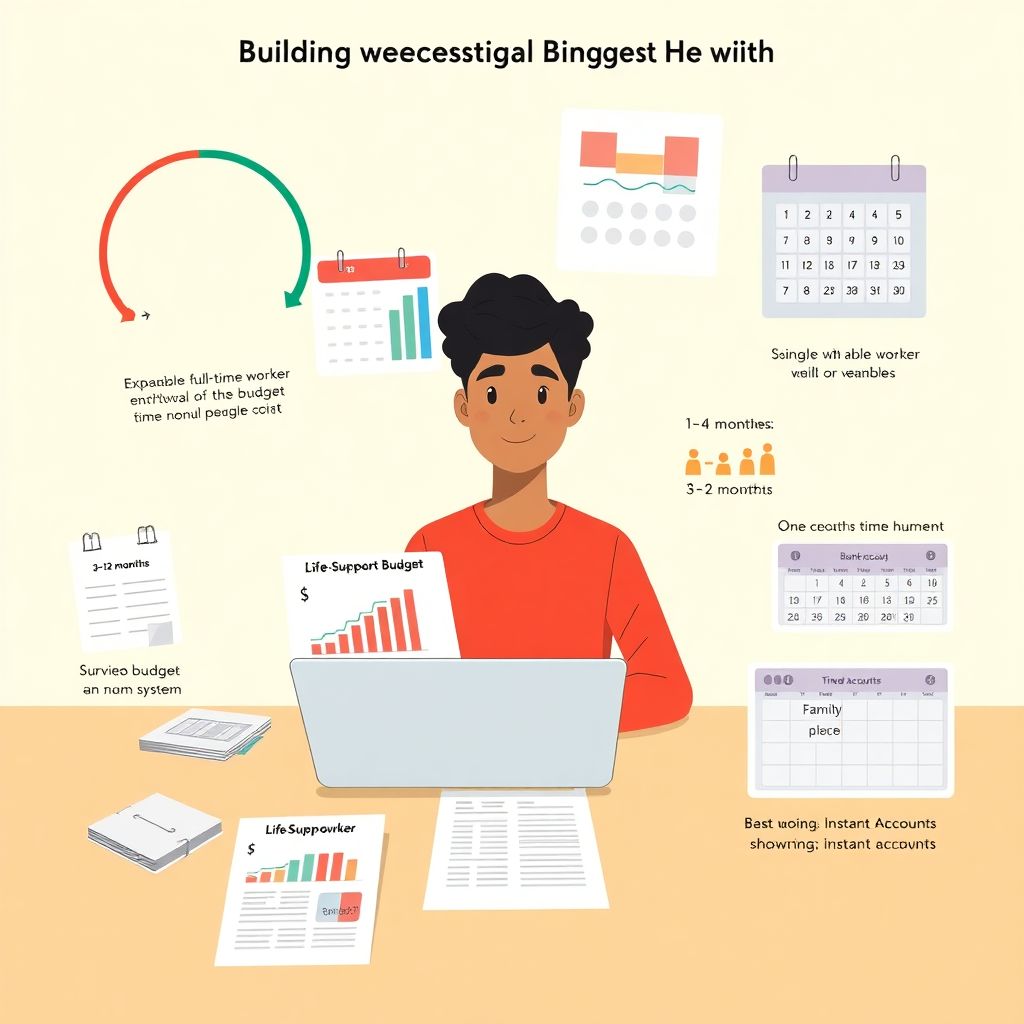
Most people think of an emergency budget plan only after something already went wrong: job loss, a broken boiler in January, a medical bill that looks like a phone number. The aim of this guide is to reverse that logic and show how to build a flexible, living emergency budget that actually works in the real world, not just in finance blogs. We’ll mix numbers, psychology and a few unconventional tricks, so that your plan survives both a three‑day problem like a car repair and a six‑month crisis like redundancy.
Rethinking What “Emergency Budget” Really Means
From static number to living system
Instead of obsessing over “the perfect amount”, think of your emergency budget as a system that can shrink and expand with your life. A family with two stable government salaries lives in a different risk universe than a freelancer paid irregularly in three currencies. That’s why the classic advice of “3–6 months of expenses” is only a crude baseline. When you ask yourself “emergency fund how much should I save”, the better question is: “How many months would it realistically take me to recover my income if everything froze tomorrow?” For a software engineer in a hot market this can be three months; for a self‑employed designer in a niche city it might be nine.
Two separate goals: buffer vs. bare‑bones survival
A useful mental split is between a “shock absorber” and a “life‑support” budget. The shock absorber covers messy but limited issues: dental work, an urgent plane ticket, replacing a dead laptop. Life‑support is the budget that keeps a roof, food and essential meds going when income disappears completely. In practice this means creating two numbers: the average monthly spending you have now, and a trimmed survival budget with rent, utilities, food, transport and basic insurance only. Many people find that their survival number is 40–60% of their current lifestyle, which immediately makes the total target far less intimidating and shows where you can cut if needed.
Mapping Your Emergency Budget in Detail
How to create an emergency budget step by step
First, pull three months of bank and card statements and mark every line as either “must‑keep”, “can pause” or “can kill”. Be ruthless: subscriptions, upgrades, impulse orders. Then construct your survival month from only the “must‑keep” items, adding a realistic buffer of 10–15% for price hikes and forgotten small charges. Multiply that by the number of months you decided earlier based on your job risk and family obligations. This becomes your core emergency target. If you hate spreadsheets, use any emergency fund calculator online as a starting point, but then adjust manually, because calculators cannot see your aunt who always needs support or your chronically sick pet.
Technical details: choosing your time horizon
For a single person with one stable full‑time job, no dependents and strong employment prospects, a 3–4 month survival budget is usually defensible. For households with kids, one income source or chronic health issues, 6–9 months is safer. Freelancers who survived 2020 often now choose a 9–12 month horizon. A useful formula is: “base months” (3 or 6) plus “risk months” (1–3) for each major uncertainty such as unstable industry, single income or visa status. This quantitative approach keeps you from copying someone else’s number and anchors your plan in your actual exposure to shocks, not in generic advice from social media threads.
Where to Park the Money So It Actually Works
Liquidity first, return second
Your emergency money is not an investment; it’s a fire extinguisher. It must be boring, instantly accessible and protected from your own impulses. Cash under the mattress fails on inflation and safety, while speculative assets fail on timing—you rarely face a crisis when markets are calm. A practical structure is to keep the first one to two months of survival expenses in a regular checking account for pure speed, and the rest in the best high yield savings account for emergency fund purposes that your bank or a reputable online institution offers. The difference between 0.01% and 4–5% APY isn’t theory: on $10,000, that’s roughly $400–500 a year of interest instead of $1.
Technical details: avoiding liquidity traps
Be careful with “almost liquid” options that promise slightly higher returns. A one‑year CD or term deposit might lock the money exactly when you need it. Bond funds can lose value right when rates spike or markets panic. A reasonable compromise for advanced users is to keep 70–80% in a simple savings account or money‑market fund and only 20–30% in slightly less liquid instruments. Always test yourself with one question: “Can I get to at least half of my fund in 24 hours without penalties or market risk?” If the answer is no, your emergency budget is more of a wish than a plan.
Non‑Obvious Ways to Build the Fund Faster
Designing automatic friction instead of relying on willpower
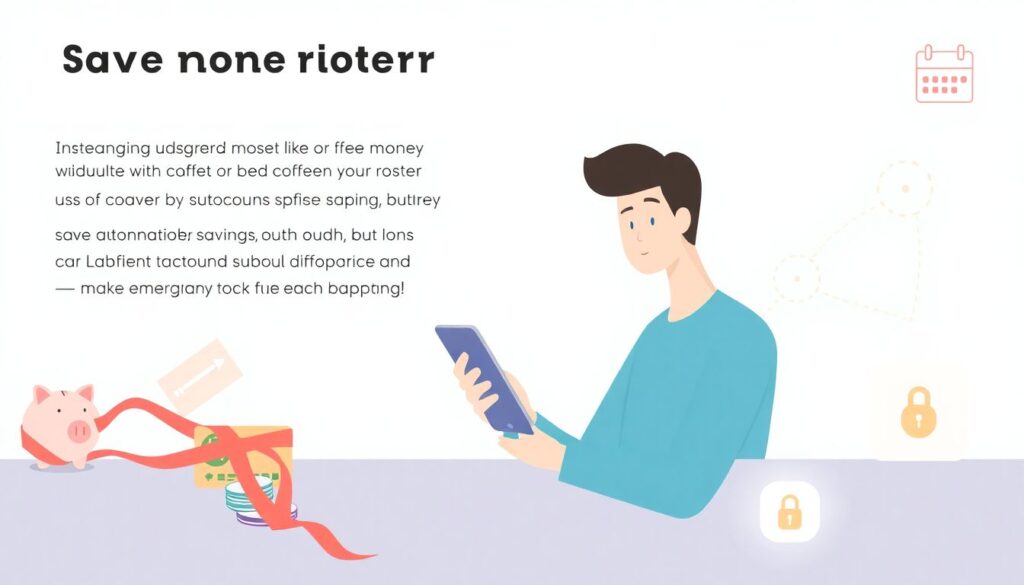
Most advice on tips to save money fast for emergency fund boils down to “cut coffee and cook at home”. That gets old quickly. Instead, engineer small frictions that make overspending annoying and saving automatic. Open a separate bank account at a different institution without a card attached and set a recurring transfer for the day after payday, starting with, say, 5–10% of net income. Then remove that account from your main banking app’s quick view so it becomes slightly “out of sight”. People are often surprised how quickly a semi‑invisible $150–200 monthly transfer compounds into several thousand without constant discipline or guilt‑based budgeting.
Leveraging temporary sprints, not permanent suffering
A powerful unconventional tactic is the “90‑day repair sprint”. For three months, you deliberately push your lifestyle closer to your survival budget, not as punishment but as a test run. You downgrade only temporarily: pause streaming services, drop premium gym memberships in favor of pay‑per‑visit options, negotiate bills, and route every freed dollar into the emergency account. Knowing this sprint has a hard end date makes it psychologically sustainable, while the data you gather—how much you truly miss each expense—helps you refine your long‑term budget. Many households report saving $1,000–2,000 in a single sprint without feeling like ascetic monks.
Using Assets, Skills and Networks as Part of Your Plan
Redefining “cash” to include convertible resources
An emergency budget is not just numbers on a bank statement; it also includes what you can turn into money or cost reduction within a week. A spare room that can be listed short‑term, equipment you can rent out, a secondary skill you can monetize quickly—all of this acts as an informal extension of your fund. During the pandemic, several photographers I worked with survived long dry spells not only because they had three months of savings, but because they rapidly converted their editing skills into remote freelance gigs. When calculating your required horizon, you can subtract one month if you have at least one tested, ready‑to‑deploy backup income channel.
Technical details: quantifying non‑cash buffers
To avoid overestimating these buffers, assign conservative values. If you can comfortably earn an extra $300 a month with weekend work, treat it as $150 in your planning. If renting out a room typically brings $600, assume $400 after vacancy and fees. Then treat these numbers as “income shock absorbers” rather than as replacements for cash. Document in advance what platforms you’ll use, what rates you’ll charge and what assets you’d sell first under pressure. This pre‑decision work turns vague optimism into a semi‑formal emergency protocol and reduces the paralysis that often accompanies real‑world crises.
Keeping Your Emergency Budget Plan Alive
Review rituals and upgrade triggers
An emergency budget built once and forgotten will quietly decay as your life changes. Set a recurring calendar event every six months to revisit your survival budget, update prices and review your risk factors. A job change, new child, relocation or major health diagnosis are automatic triggers to reassess: maybe your “base months plus risk months” formula needs an extra buffer. Recheck whether your savings still sit in a competitive vehicle; interest rates move, and the “best” account 18 months ago could now be mediocre. Use those reviews to decide whether to maintain, grow or even modestly reduce the fund if your risk profile has significantly improved.
From emergency‑only to resilience‑first mindset

Once your core fund is in place, the real payoff is psychological. Money stops being a constant background noise and becomes a shock absorber that lets you take smarter risks: changing careers, leaving a toxic job, starting a small side project. At that stage you can repurpose your old emergency routines—automatic transfers, review rituals, cash‑flow awareness—to build other goals like retirement or a house deposit. The emergency budget was just the training ground. When the next crisis comes, you won’t be improvising in panic; you’ll be executing a plan you tested, adjusted and fully understand—and that’s what real financial resilience looks like.