

Why Financial Literacy for English Learners Matters in 2025
From cash wages to digital wallets: a quick historical detour
If you look at the last hundred years, money has changed faster than almost any other part of daily life. In the 1920s most workers were paid in cash, banks were local, and cross‑border transfers were rare. After World War II, credit cards and consumer lending exploded, and by the 1990s global finance, index funds and student loans became normal. Since 2008 the system shifted again: smartphones, low‑cost online brokers, remittances in seconds, and now digital wallets and cryptocurrencies. For English language learners this historical trajectory matters, because each new financial instrument comes with new vocabulary, contracts and regulations. If you miss the language, you risk missing the meaning of fees, interest rates or fraud warnings, even if you are excellent at math and very disciplined with spending.
When language gaps turn into financial risks
In 2025, financial products are designed in English first and localized later, which quietly disadvantages newcomers. Think about a typical banking app: push notifications in complex terms, fine print about variable APR, overdraft protection, or robo‑advisor risk profiles. A learner might understand everyday English but still misread “introductory rate” or “balloon payment”, which can cause real monetary losses. Research from central banks and migration institutes repeatedly shows that limited proficiency in the dominant language statistically correlates with higher debt stress, weaker credit scores and under‑utilization of employer benefits. This is why any modern attempt to teach money management to English language learners cannot just translate words; it has to decode the logic of the entire financial ecosystem, from tax credits to pension matching, so that learners can negotiate with banks, landlords and employers on equal terms.
Inspiring Real‑World Examples
A nurse who turned budgeting into a leadership skill
Consider Elena, a nurse who moved from Peru to Canada ten years ago with intermediate English. Her first job contract looked good, but she signed without understanding overtime rules or pension contributions. After a painful tax bill, she enrolled in a community workshop designed as a financial literacy course for English language learners, where every concept—gross income, net pay, taxable benefits—was practiced through role‑plays and annotated pay stubs. Within a year she optimized her shift schedule, joined her employer’s retirement plan and paid off credit‑card debt. The interesting twist is that she then became a peer mentor, running informal lunch‑and‑learns for new hires. Financial literacy, once a source of anxiety, turned into social capital: her supervisors noticed her analytical skills, and she was promoted to a scheduling coordinator role, proving that economic confidence can translate directly into career mobility.
From international student to startup founder
Another story comes from Tariq, who arrived in the UK as an international engineering student. He could handle advanced calculus but had never seen a student loan contract, an ISA investment account or a credit score report. He almost signed a predatory rental agreement because he misinterpreted “guarantor liability”. After a scare, he joined an on‑campus mentoring program that blended online financial education for ESL students with live Q&A sessions. There he learned to read lease clauses, evaluate currency‑exchange fees on remittances to his family, and set up a simple investment plan using low‑cost ETFs. That foundational knowledge later helped him co‑found a fintech startup building bilingual budgeting tools for migrants. For him, financial literacy was not just self‑protection; it became a business opportunity rooted in his own experience of navigating money across languages and jurisdictions.
How to Actively Build Financial Skills
Turning everyday transactions into a learning laboratory
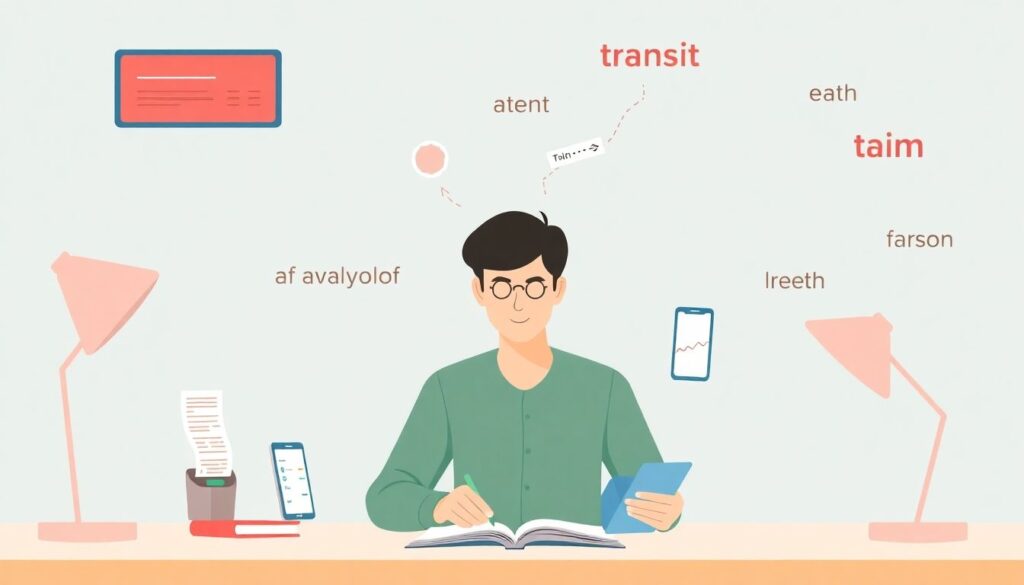
You do not need Wall Street experience to build practical expertise; you need a system. Start by converting daily money decisions into micro‑lessons. Any time you touch money—topping up a transit card, paying rent, sending a transfer—capture the key English terms involved and look up their exact definitions, not just translations. Create a “personal finance glossary” on your phone, with screenshots of contracts and notes about vocabulary like “statement balance”, “interest‑only”, or “early repayment penalty”. Pair this with a simple monthly cash‑flow statement, tracking every inflow and outflow in the currency where you actually live. Over a few months you will see patterns: maybe subscription creep, hidden bank fees, or tax deductions you are missing. This habit turns abstract financial literacy into an applied analytics exercise where you iteratively improve decisions using your own real data rather than textbook scenarios.
Using modern courses without drowning in jargon
The market now offers countless personal finance classes for non native English speakers, but quality varies wildly. When choosing, focus on three indicators: explicit language support, transparent learning outcomes and practical assessment. A strong program does not just show slides; it walks you through authentic artifacts—bank statements, loan offers, investment dashboards—and lets you practice negotiating or asking clarification questions. Look for the phrase financial literacy curriculum for ESL adults in community colleges, libraries or adult‑education centers; these curricula are usually aligned with national financial‑education standards and also mapped to language‑proficiency descriptors like CEFR or CASAS. For flexible schedules, pick a blended model where recorded lectures explain terminology step‑by‑step and live sessions are used for case discussions, so you can pause, rewatch and annotate complex segments at your own pace.
Successful Projects That Changed Communities
Community colleges integrating finance and language
One of the most effective innovations in the last decade has been integrating money topics directly into language programs. In several US states, community colleges redesigned their intermediate ESL tracks so that one module is literally branded as a financial literacy course for English language learners, co‑taught by an ESL instructor and a certified financial planner. Learners practice grammar and speaking through simulations: calling a bank to dispute a fee, comparing mortgage options on screen, or explaining to a colleague why a 401(k) match is essentially “free money”. Evaluations between 2019 and 2024 showed not only better language outcomes but also higher rates of retirement‑plan enrollment, reduced payday‑loan usage and more stable housing among graduates. The key design principle is authenticity: instead of artificial dialogues about tourism, the curriculum mirrors the economic tasks that immigrants actually face in their first five years.
NGOs and fintech working together in the Global South
In Latin America and Southeast Asia, NGOs have recently partnered with digital‑wallet companies to reach migrants who work abroad but support families back home. One standout initiative built a multilingual app where micro‑lessons about savings, credit scoring and remittance costs are embedded directly into the payment flow. When users initiate a transfer, the app briefly explains, in accessible English and the local language, how exchange‑rate spreads and fixed fees interact, and offers a quick tutorial on comparing providers. Completion of modules unlocks lower fees or small savings bonuses, creating a behavioral nudge. Independent evaluations show meaningful improvements in users’ emergency‑fund levels and reduced reliance on informal lenders. This model shows how, when educational content is tightly coupled with real transactions, financial literacy stops being an abstract school subject and becomes a just‑in‑time decision support tool.
Resources and Next Steps for Learners
Building your own multilingual learning stack
To make steady progress, combine curated resources instead of relying on a single textbook. Start with reputable government or central‑bank portals that explain consumer rights and basic products in plain English; many now add glossaries and audio versions, which are ideal for listening practice. Supplement these with platforms that specialize in online financial education for ESL students, where videos use subtitles, slowed‑down speech and interactive quizzes. Add at least one podcast or YouTube channel focused on budgeting and investing; treat each episode like a listening‑comprehension exercise, pausing to capture new terms. When possible, cross‑reference explanations in your first language to verify understanding, but do calculations and note‑taking in English, so your “mental spreadsheet” gradually shifts into the language of your host country. Over time this stack functions as a personalized, living textbook that updates as financial regulations and products evolve.
Finding programs that respect adult experience
Adults arrive with rich financial experience from their home countries—negotiating prices, running small businesses, supporting relatives—so effective programs build on that instead of starting from zero. Look for community centers or nonprofits that explicitly advertise a financial literacy curriculum for ESL adults and ask how they integrate learners’ own stories into lessons. Many such organizations now collaborate with banks to host evening workshops on topics like credit‑building, small‑business loans and home‑buying, delivered as personal finance classes for non native English speakers. A good facilitator does not lecture; they moderate discussions where participants compare practices from different cultures, unpack local regulations and rehearse conversations with employers or landlords. By 2025, the most impactful initiatives treat financial literacy for English language learners as a form of civic infrastructure: a way to ensure that everyone, regardless of accent or passport, can read the rules of the economic game and play it with full competence.