

Rethinking Wealth When Your Income Is “Just Okay”
Why a Moderate Income Is More Powerful Than You Think
Most people secretly believe that real wealth only happens to people with huge salaries or lucky breaks. If your paycheck feels “average,” it’s easy to decide the game is rigged and stop trying. But that belief quietly kills your chances. The truth: how to build wealth on a low income or on a moderate one is mostly about habits, time, and consistency, not about flashy numbers on a payslip. A steady, reasonable salary plus a clear plan can beat a high income that’s spent mindlessly. Once you treat your money as a tool instead of a stress trigger, your “average” income turns into a surprisingly strong engine.
The Mindset Shift: From “Not Enough” to “What Can I Do Today?”
Before you touch spreadsheets and apps, you need one brutal but empowering idea: you can’t wait for a miracle raise to start building wealth. If you can pay your basic bills and have even a small surplus some months, you can begin. The key is switching your inner dialogue from “I can’t afford to invest” to “what is the smallest step I can lock in this month?” That might be 2–5% of your pay, not 20%. That might be paying off a high‑interest credit card before anything else. Once your brain sees progress, even tiny progress, it becomes easier to keep going and harder to self‑sabotage with impulse buys and random loans.
—
Step 1: Get Ruthlessly Clear on Your Numbers
Simple Financial Planning for Middle Class Families and Singles
Whether you live alone or support kids, financial planning for middle class families starts with clarity, not complicated formulas. You don’t need a finance degree; you need an honest, detailed picture of what your money does each month. For one full month, track every expense: rent, subscriptions, snacks, taxis “just this once.” It’s boring, but it exposes leaks you didn’t know existed. Once you see that “small” habits eat 10–25% of your income, you realize you do have room to save and invest; it was just scattered. Think of this as a health check‑up for your wallet: uncomfortable, but it gives you a diagnosis you can actually treat.
A Practical Budget You’ll Actually Stick To
Rigid budgets fail because they ignore the fact that you’re human. Instead of swearing you’ll never eat out again, build a flexible “envelope” system, digital or physical. Decide in advance how much goes to essentials, goals, fun, and future you. The ratio can be adjusted, but the rule is simple: you don’t cross envelopes once they’re empty. Over time, you’re not asking “Can I afford this?” every five minutes; the budget answers for you. That mental relief is huge. When you can see that your investments and savings are getting paid before your impulses, you stop feeling like money is constantly slipping through your fingers.
—
Step 2: Learn How to Save and Invest Money on a Moderate Income
Build a “Shock Absorber” Before Anything Else
Wealth starts with not going backward every time life throws a problem at you. Your first real target is a basic emergency fund: 1–3 months of essential expenses parked in a simple savings account. It won’t make you rich, but it keeps you from using high‑interest debt for every car repair or medical bill. Even if you can only add the equivalent of a few coffees each week, automate it. Treat it like a quiet bill you pay to yourself. Once that fund exists, every other move you make—investing, side projects, even career risks—feels less terrifying because you’ve built a small safety net.
Automation: The Quiet Superpower for Average Earners
When your income is modest, discipline matters more than drama. Set up automatic transfers the day after payday: one to your emergency stash, one to your investment account, one to any debt you’re attacking. That way, you’re deciding with a clear head once a month, instead of negotiating with yourself every time you see a sale. It may feel small—maybe $50 here, $100 there—but over a few years, the “set and forget” approach does the heavy lifting. You’re no longer waiting to see “what’s left” at the end of the month, because you’ve already paid your future self first.
—
Step 3: Beginner Investing Strategies for Low and Middle Income Earners
The Best Ways to Invest With a Small Salary
If you’re wondering about the best ways to invest with a small salary, forget about picking hot stocks or timing the market. Your advantage isn’t secret information; it’s consistency and low fees. A simple, broadly diversified index fund or ETF, bought every month, beats 90% of amateur stock pickers over time. Use tax‑advantaged accounts if your country offers them (like 401(k), IRA, ISA, or pension plans). Start tiny if you must—many platforms now allow fractional shares. The point isn’t looking impressive on day one; it’s building a machine that grows while you’re asleep, even if it starts out as a toy engine.
How to Build Wealth on a Low Income Using Time, Not Tricks
People get stuck Googling “how to build wealth on a low income” and hope for some magic shortcut. But the formula is brutally simple: invest a small slice of every paycheck into assets that appreciate—like broad stock funds or retirement plans—then leave them alone. If you start in your 20s or 30s, even a modest contribution can snowball through compound interest. Check your accounts quarterly, not daily. The less you react to market noise, the more your calm, boring plan does what it’s supposed to do. Wealth here isn’t a lottery ticket; it’s a slow‑burn fire you feed regularly.
—
Step 4: Grow Your Earning Power on Purpose
Recommendations for Developing Your Skills (That Actually Pay Off)
Cutting costs has a limit; increasing income doesn’t. Part of learning how to build wealth on a moderate income is asking, “How can I make this income less moderate over time?” Focus your personal growth on skills that the market rewards: communication, basic tech literacy, data skills, project management, and any certification that is in demand in your field. Treat your free time like a small training budget: one online course, one portfolio project, one new tool every few months. That doesn’t feel huge today, but compound learning is as powerful as compound interest; the you of three years from now can command very different pay.
Realistic Ways to Boost Income Without Burning Out
You don’t have to quit your job and become a founder next week. Sometimes the smartest move is simply becoming 20% more valuable at your current job, then asking for a promotion or raise with clear evidence. In parallel, you can test simple side projects: tutoring, freelance work, basic online services, or selling a practical digital product. Start with something you can execute in a few hours a week without destroying your health. The extra $100–300 a month, when directed into investments or debt payoff instead of lifestyle upgrades, can shave years off your path to financial independence.
—
Inspiring Examples: Ordinary People, Unordinary Choices
Case 1: The Teacher Who Quietly Became a Millionaire
Consider Maya, a public school teacher whose salary never felt glamorous. In her late 20s, she decided that beginner investing strategies for low and middle income earners were written for people like her, not just for finance geeks. She started by contributing a small percentage to her retirement plan, choosing a low‑fee index fund, and increasing her contribution 1% every year, especially after modest raises. She also threw any side‑gig money—weekend tutoring and exam prep—straight into the same fund instead of letting it inflate her lifestyle. Twenty years later, still on a humble salary, she crossed seven figures in her retirement accounts. No inheritance, no lottery, just a quiet, consistent strategy.
Case 2: The Couple Who Used a Small Business to Change the Game

Another example: a middle‑income couple, Alex and Lena, both working regular office jobs. They were tired of feeling stuck, so they treated their evenings like a long‑term project. Alex learned basic web design from free online resources; Lena improved her copywriting and marketing skills. Together they started building simple websites for local businesses—cafés, salons, small shops. The first months were slow, but they reinvested every dollar into better tools and marketing. Within three years, their “tiny agency” was bringing in more than one of their full‑time salaries. Instead of expanding their lifestyle, they used the surplus to wipe out debt and then invest aggressively, compressing decades of financial progress into a few intense years.
—
Turning Ideas Into Action: Your Personal Playbook
A Simple Action Plan You Can Start This Week
You don’t need to implement everything at once. Start with a lean, realistic set of moves and let them stack:
– Track every expense for 30 days; then cut or downgrade at least three recurring costs.
– Set up one automatic transfer to savings or investments, no matter how small.
– Choose one learning goal that can raise your income potential within 6–12 months.
These steps look almost too small to matter, but they do two critical things: they prove to you that change is possible, and they create momentum. Once you feel even a little control returning, it becomes way easier to say “no” to pointless spending and “yes” to actions that actually move the needle.
Guardrails to Keep You From Slipping Back
Momentum is great, but real life is messy. Salaries stay flat for a while, kids get sick, car repairs appear out of nowhere. That’s normal, not a sign that your plan is broken. Protect yourself with a few guardrails:
– No new high‑interest debt unless it’s a genuine emergency.
– Any income increase (raise, bonus, side gig) gets split: some for quality of life, some for your future.
– Review your money plan once a quarter, not every day—adjust, then live your life.
With these simple boundaries, you avoid the “all or nothing” trap. Even when things go sideways, you’re stumbling forward instead of falling back to zero.
—
Resources for Learning and Staying Motivated
Where to Learn Without Spending a Fortune
You don’t need expensive seminars to understand how to save and invest money on a moderate income; the internet is packed with solid, free or low‑cost material. Look for reputable personal finance blogs, government or nonprofit financial education sites, and well‑reviewed YouTube channels that focus on long‑term investing, not quick wins. Complement that with beginner‑friendly books on index investing, budgeting, and career growth from authors who emphasize process over hype. Add podcasts or newsletters you can consume during commutes; they keep your brain soaked in useful ideas instead of constant ads and consumption triggers.
Building Your Own “Wealth Circle”
Information alone won’t change your life if everyone around you treats money recklessly. Try to build a small “wealth circle”: a few friends, colleagues, or online communities where people share goals like paying off debt, learning new skills, and investing regularly. You don’t need perfect experts; you need people moving in the same direction. Share wins, ask questions, compare notes on platforms and strategies. Over time, this quiet support system normalizes the idea that of course you invest, of course you budget, of course you think long‑term. That social proof can be the difference between quitting after a setback and adjusting your plan and continuing.
—
Bringing It All Together
Your Moderate Income Is the Starting Line, Not the Ceiling
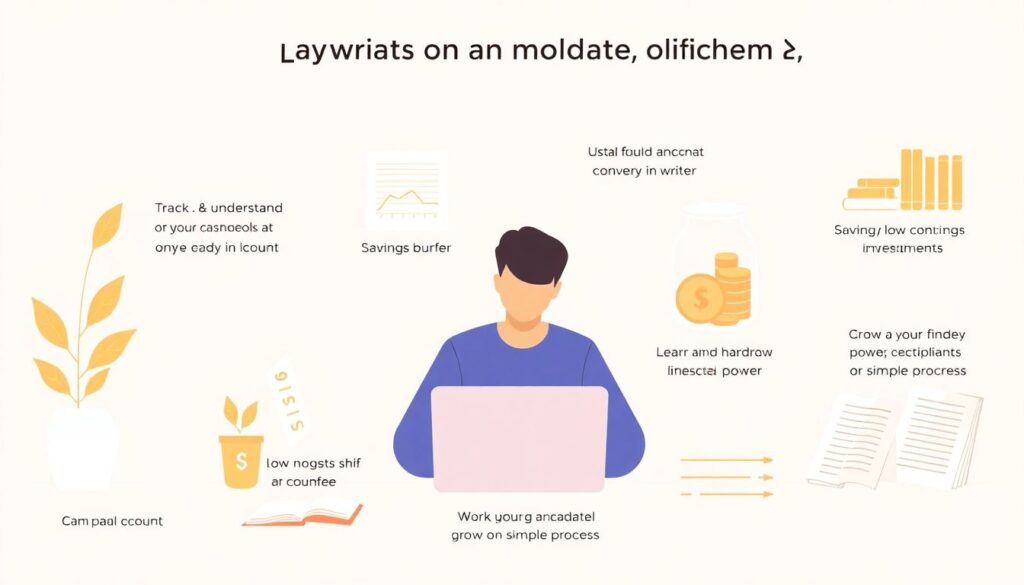
Wealth on a moderate income doesn’t happen overnight and it doesn’t look flashy on Instagram. It looks like a series of small, consistent decisions: understanding your cash flow, building a safety buffer, using simple investments, growing your earning power, and protecting your progress with basic guardrails. None of this requires perfection or genius; it requires persistence and a willingness to start messy. If you treat every paycheck as a chance to move 1% closer to freedom, the compounding effect over years will shock you. Your income right now is not your destiny; it’s just the raw material. What you build from it is up to you.