
If you’re scrolling finance TikTok in 2025, you’ve probably heard people rave about biweekly payments as a “hack” to kill debt faster. Underneath the hype, there’s a very real, very old-school math trick: pay slightly more often, shrink interest charges, and shave months or even years off your loans. This guide unpacks how that actually works, where it makes sense, and where it can quietly backfire. We’ll move шаг за шагом: from understanding the mechanics, to setting things up with your bank, to building habits so the plan doesn’t collapse the first time life throws you a curveball. Along the way, I’ll highlight common traps, and how modern tools and trends in 2025 can make the process smoother instead of stressful.
Step 1: Understand what “biweekly” really means
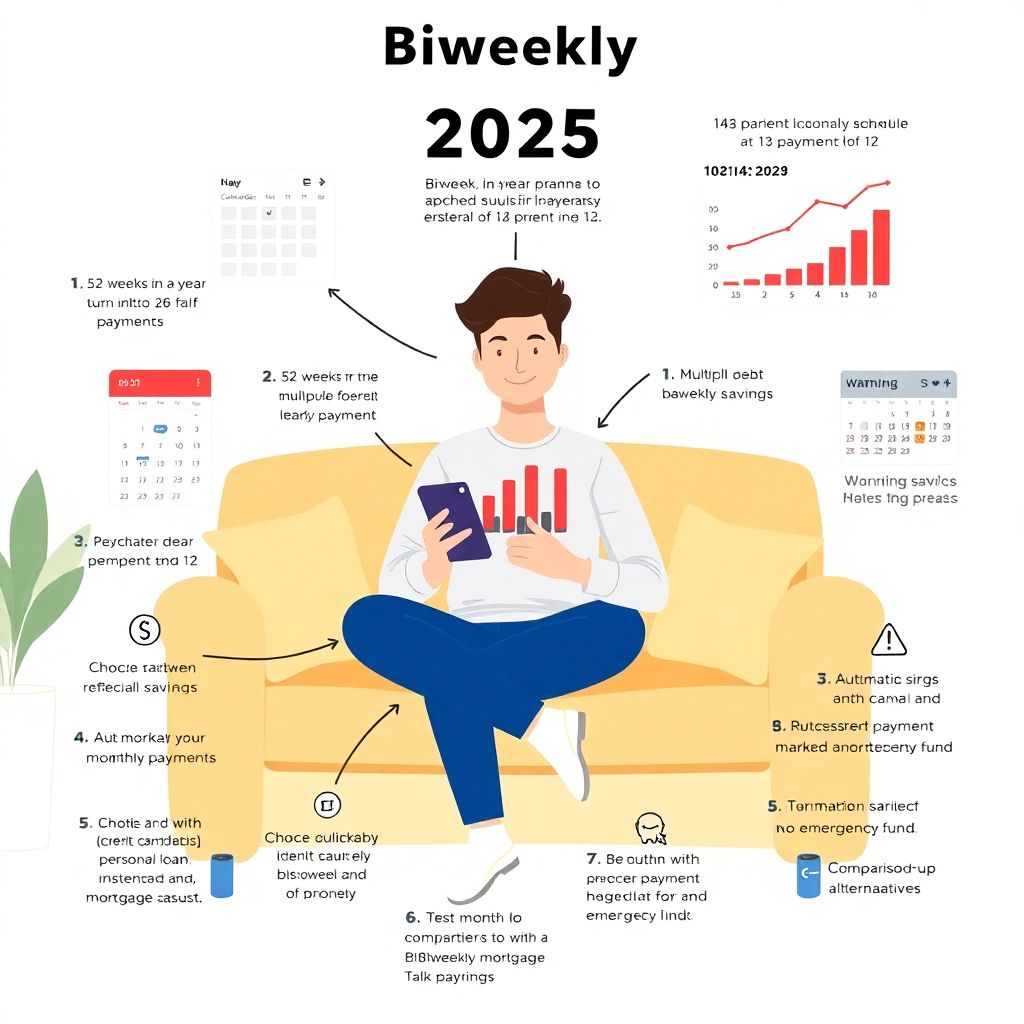
Biweekly payments don’t mean “paying half as much.” They mean paying half your usual monthly amount every two weeks. Because there are 52 weeks in a year, that’s 26 half‑payments, or the equivalent of 13 full payments instead of 12. That invisible “extra” payment is where the magic happens. Many people mix this up with simply “splitting the bill” and then get disappointed when nothing changes. Before touching any of your loans, double‑check whether your lender applies each biweekly payment as it arrives, or just holds them and posts them once a month. If they batch them, you lose a big part of the interest savings.
Step 2: Use the math, not the hype

In 2025, you don’t need a spreadsheet genius in the family; you can plug your numbers into a biweekly mortgage payment calculator or a debt payoff simulator in a budgeting app and see the results in seconds. Those tools will estimate how many months you’ll shave off and how much interest you’ll avoid if you switch to biweekly. The important thing is to compare “biweekly vs monthly mortgage payments savings” or loan savings using your exact balance, rate and remaining term, instead of trusting generic screenshots from social media. This also protects you from one common error: underestimating how tight your cash flow will feel when paychecks are irregular, freelance, or heavily bonus‑based.
Step 3: Decide which debt to attack first
Not all debt deserves the same treatment. High‑interest credit cards and personal loans are usually bleeding you faster than a fixed‑rate mortgage, especially after the rate spikes of the early 2020s. The best strategy to reduce credit card debt quickly is almost always to combine biweekly payments with a focused repayment method: either “avalanche” (highest rate first) or “snowball” (smallest balance first). Both can work; the key is not to scatter tiny biweekly amounts across ten different accounts and then wonder why nothing moves. Pick one or two priority debts, concentrate your extra payment frequency there, and keep the rest on bare‑minimum autopay so you never pay late fees.
Step 4: Align biweekly payments with your pay schedule
The system works best when it matches how you actually get paid. Biweekly wages pair naturally with biweekly debt repayment plans with biweekly payment options, because you can route part of each paycheck to your target loan as soon as it arrives. If you’re paid semi‑monthly (say, on the 15th and last day), you’ll need to be more deliberate: set calendar reminders, or use automatic withdrawals that hit your account right after payday. For gig workers and remote freelancers, variability is the big risk; in that case, a “flex‑biweekly” plan where you aim for 26 payments per year but allow some to be larger and some smaller may be more realistic than a rigid fixed amount.
Step 5: Set up automation the right way
Automation is powerful, but sloppy setup can cost you. When configuring biweekly payments through your lender’s portal or your bank’s bill‑pay, confirm three things: first, that each payment is applied immediately to principal and interest, not held as a “future payment”; second, that there is no “biweekly service fee” sneaking in; third, that your original due date is still covered so you never show as “past due” in their system. In 2025, some fintech apps will offer smart routing, sending extra biweekly chunks to whichever loan has the highest interest that week. That’s useful, but beginners should start simple with one target debt to avoid confusion and accidental overdrafts.
Step 6: Start with a low‑stress test month
Instead of flipping all your loans to biweekly at once, run a 30‑day experiment. Choose one account, redirect half the usual monthly payment every two weeks, and watch how it hits your checking balance. This test month will surface practical questions: Do you feel squeezed before rent is due? Do you forget the second payment because your work calendar is hectic? Do pending subscription charges collide with your new schedule? It’s much easier to adjust timing, amounts, or even switch banks while only one account is involved. Once everything feels stable and predictable, you can roll out the same pattern to your next‑priority debt.
Step 7: Avoid the classic biweekly mistakes
Several errors repeat in almost every household I’ve seen adopt this system. One is treating biweekly as a magic button and then compensating by spending more on lifestyle, cancelling out the gains. Another is ignoring small print: some lenders simply split your monthly due into two and do not give you that extra annual payment unless you explicitly tell them to keep the total annual amount higher. A third is letting irregular expenses—car repairs, back‑to‑school costs, holiday travel—wreck your plan because you never built a modest emergency fund first. Biweekly works best when it’s layered on top of a basic cushion, not used as a substitute for one.
Step 8: Compare alternatives and hybrids
Biweekly isn’t the only path to accelerating payoff. A “13th payment” once a year, or rounding up every payment by a fixed amount, can produce similar results with less complexity. Modern budgeting apps in 2025 often let you simulate how to pay off debt faster with biweekly payments versus a single extra lump sum each quarter, and sometimes the difference is smaller than you’d expect. The real advantage of biweekly for many beginners is psychological: smaller, more frequent actions feel doable, and the consistent rhythm can build discipline. If your income is lumpy or you’re already juggling several goals, a hybrid approach—regular monthly payments plus occasional targeted boosts—might actually be more sustainable.
Step 9: Track progress visually and regularly
Human brains respond better to visuals than to abstract interest math. Once your biweekly system is running, track the shrinking balance with charts or progress bars, whether inside your banking app or in a simple planner. In 2025, many people sync their accounts to dashboards that show real‑time “interest saved so far,” which can be surprisingly motivating on slow months when the principal seems to move only a little. Checking this once a month is enough; doing it daily can lead to impatience and burnout. Consistency over a year or two will do far more for your finances than obsessing over every tiny fluctuation.
Step 10: Know when biweekly doesn’t make sense
There are situations where biweekly is the wrong tool. If your budget is extremely tight and you’re regularly incurring overdraft fees, the priority is stabilizing cash flow and cutting unnecessary costs, not increasing payment frequency. If your mortgage rate is very low and you carry heavy double‑digit credit card interest, it can be smarter to keep the home loan on vanilla monthly mode and throw every extra dollar at the cards. And if your lender refuses to apply extra payments correctly or charges for the privilege, a simpler strategy—like manual extra principal payments once a quarter—may be more rational than fighting their system. The trend in 2025 is to personalize, not blindly copy a one‑size‑fits‑all hack.
Bringing it all together for the long game
Biweekly payments are not a silver bullet; they’re a disciplined, slightly accelerated way of doing what actually matters: paying more than the minimum, more often, for long enough that interest has less time to grow. Modern tools—from calculators and automation to AI‑driven budgeting coaches—make the mechanics easier than ever, but they can’t decide priorities for you. Choose your highest‑impact debt, sync your payment rhythm with your income, automate thoughtfully, and protect the plan with an emergency buffer. Do that, and the “extra” 13th payment each year stops being a theory and turns into real months shaved off your payoff date, giving you room to fund the rest of your life instead of just your past.